
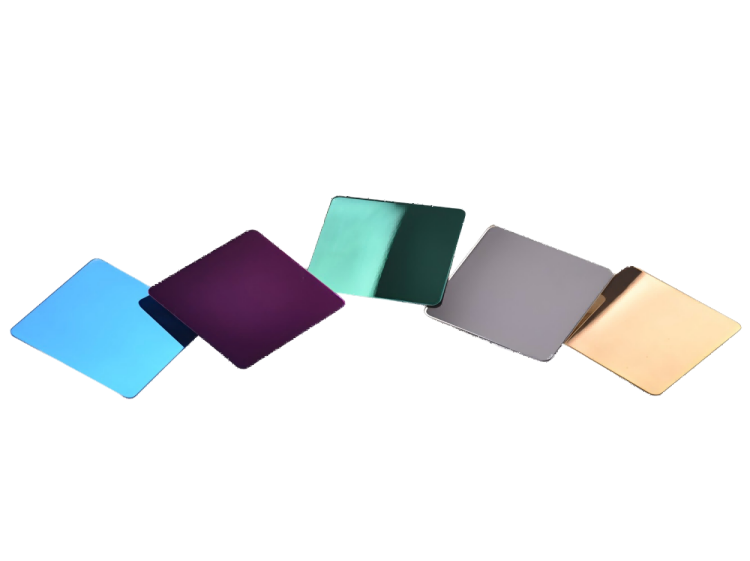
PVD (Physical Vapor Deposition) coating is widely used to enhance the surface appearance and durability of stainless steel sheets. It provides vibrant metallic colors such as gold, rose gold, black, bronze, and blue while improving wear and corrosion resistance. However, not all stainless steel grades respond equally well to PVD processes. In this article, we explore how 304, 316L, and 201 stainless steel perform under PVD coating and what factors you should consider when choosing a base material.

Performance Comparison Table
| Property | 304 | 316L | 201 |
| Cr/Ni Content(%) | 18/8 | 16/10(+2 Mo) | 16/4(Mn~7%) |
| PVD Adhesion Rating | 4B-5B | 5B | 3B-4B |
| Salt Spray Resistance(hrs) | ≧500 | ≧800 | ≤500 |
| PREN(Corrosion Index) | ~18 | ~24 | ~14 |
| Polishablity(Mirror Grade) | High | High | Medium |
| Typical PVD Finish Lifespan | 5-8 years | 8-10+ years | 2-4 years |
| Cost Index(relative) | ★★★ | ★★★★ | ★★ |
Recommendations
| Project Condition | Recommended Grade | Reason |
| Outdoor/Marine/Coastal | 316L | Best coorosion&PVD durability |
| Indoor/High-Touch Decorative | 304 | Excellent polish,adhesion & cost balance |
| Low Budget/Temporary Display | 201 | Acceptable aesthetics at low cost (short lifespan) |
Final Thoughts
If your PVD-coated stainless steel project demands long-term color stability, corrosion resistance, and visual perfection, 304 or 316L are your most reliable choices. 316L leads in harsh environments, while 304 balances cost and performance. 201 remains a suitable budget solution—but should be used cautiously in humid or high-traffic spaces.
Contact Information:
Phone: +86 189 2312 5835 (WhatsApp/Wechat)
Email: export@aoxingmetal.com
We look forward to helping you create a stunning design with our premium stainless steel solutions!
Post time: Aug-05-2025


