
Salt Spray Test Explained for Stainless Steel
Salt spray test procedures serve as the industry benchmark for evaluating the long-term durability and corrosion resistance of various stainless steel grades in simulated maritime and high-chloride environments.
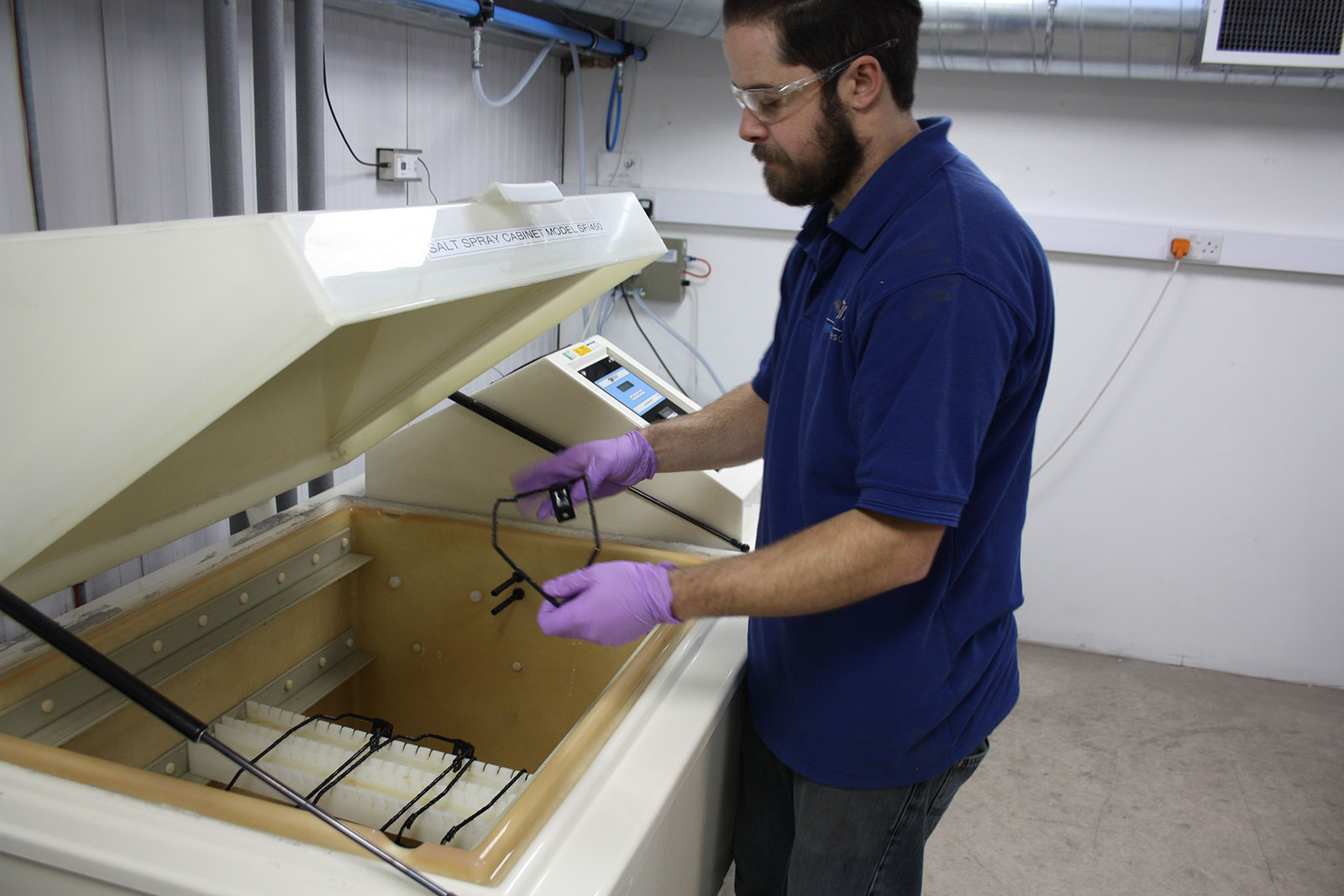
Introduction to Salt Spray Testing (SST)
For engineers and manufacturers, "corrosion-resistant" is a relative term. While stainless steel is inherently protected by a passive chromium oxide layer, it is not invincible. The Salt Spray Test (SST), primarily governed by the ASTM B117 standard, is an accelerated aging process that subjects metal samples to a dense, saline fog to observe how quickly the surface degrades.
Why Data-Driven Testing Matters
Without standardized testing, material failure in the field can lead to catastrophic structural losses or expensive recalls. By accelerating the corrosion process—where 24 hours in a test chamber might represent months of real-world exposure—engineers can gather quantitative data on:
- Pitting Resistance: The localized breakdown of the passive layer.
- Crevice Corrosion: Oxidation in tight gaps or under gaskets.
- Coating Integrity: The effectiveness of passivating treatments or electro-polishing.
How the Test Works
The salt spray test does not reinvent the wheel; it simply intensifies the natural elements. The core of the test lies in the electrochemical reaction between the chloride ions in the salt and the iron content in the steel.
Technical Parameters (ASTM B117/ ISO 9227 NSS)
To ensure reproducibility, the environment inside the chamber must be strictly controlled. The standard parameters include:
|
Parameter |
Standard Requirement |
| Solution Concentration | 5% ± 1% Sodium Chloride (NaCl) |
| Chamber Temperature | 35℃ ± 2℃ (95℉) |
| Solution pH | 6.5 to 7.2 (Neutral) |
| Fog Collection Rate | 1.0 to 2.0 ml/hr per 80cm2 |
| Air Pressure | 12 to 18 psi |
The samples are typically tilted at an angle (usually 15 to 30 degrees) to prevent the salt solution from pooling on the surface, ensuring a uniform exposure to the mist.
These conditions create a high-chloride environment equivalent to coastal or industrial marine exposure.
The PREN Factor
The Pitting Resistance Equivalent Number (PREN) is a theoretical formula used to predict a grade's performance:
PREN = CR% + 3.3 x (MO% + 0.5 x W%) + 16 x N%
Higher PREN values generally correlate to longer survival times in salt spray tests.
What is PREN?
PREN stands for Pitting Resistance Equivalent Number, and it’s vital for calculating how well stainless steel and other alloy materials withstand corrosion, specifically pitting corrosion. This condition causes small holes that can lead to less durability and it can be challenging to detect.
| Grade | PREN Value |
| 430 | ~17 |
| 304 | ~18–19 |
| 316L | ~23–26 |
Higher PREN correlates with improved salt spray resistance.
Stainless Steel Performance: Comparing Grades
Not all stainless steel is created equal. The presence of alloying elements like Molybdenum and Nickel significantly alters how many hours a sample can survive in the chamber before the first sign of "red rust" (iron oxide).
Typical Survival Hours by Grade
- Grade 201/301: These are lower-nickel alternatives. They often show signs of surface staining within 24 to 48 hours.
- Grade 304: The industry workhorse. Standard 304 stainless steel usually withstands 100 to 250 hours before significant pitting occurs, depending on the surface finish.
- Grade 316: Contains 2-3% Molybdenum. This grade is significantly more robust, often lasting 500 to 1,000+ hours in neutral salt spray conditions.
- Duplex 2205: Designed for extreme environments, these alloys can often exceed 2,000 hours without showing signs of structural corrosion.
|
Stainless Steel Grade |
Typical SST Performance |
|
430 |
24–72 hours |
|
201 |
48–120 hours |
|
304 |
120–240 hours |
|
316L |
480–1000+ hours |
Higher molybdenum and nickel content significantly improve chloride resistance.
Post time: Mar-05-2026


