430 stainless Steel
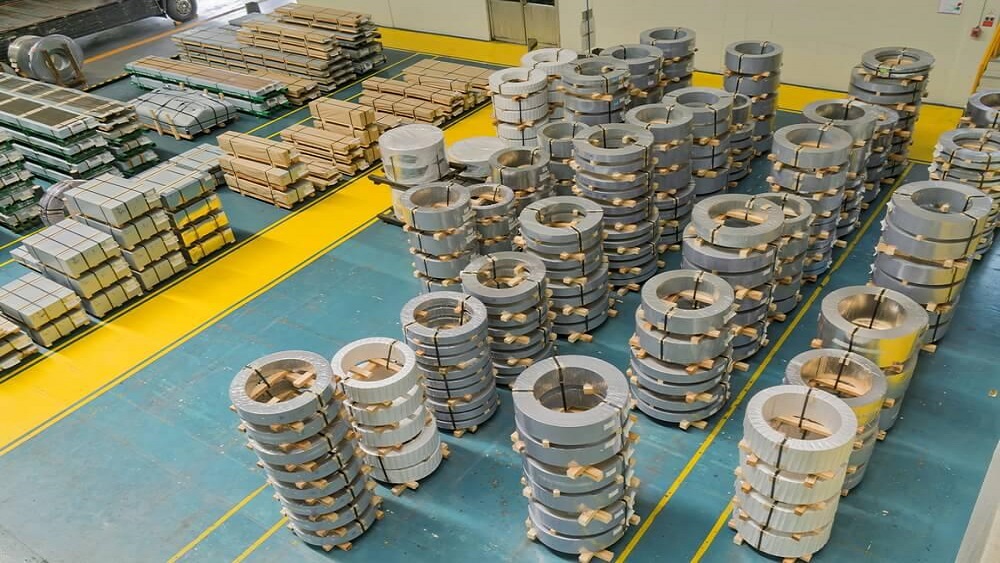
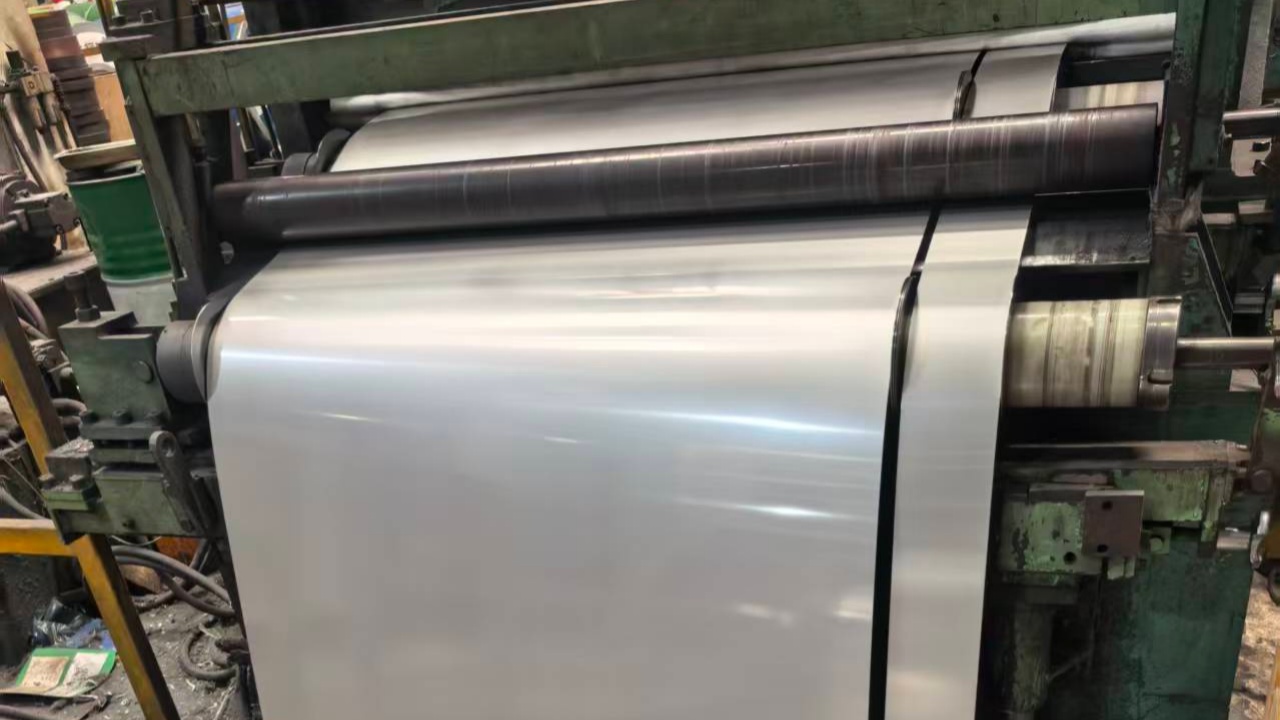
Among the wide variety of stainless steel products, 430 Stainless Steel Coil always holds a unique and significant position. As an iron-based stainless steel coil with excellent formability, practical corrosion resistance, and distinctive magnetic properties, it has become the ideal choice for many industry manufacturers when balancing performance and cost. If you are looking for a metal material that can ensure reliable performance while effectively controlling the budget, 430 stainless steel is a great option.
This article will provide a detailed analysis of the core features, significant advantages, and wide range of application areas of 430 Stainless Steel Coil.

What is 430 stainless steel coil
430 Stainless Steel Coil belongs to the Ferritic stainless steel family in metallurgical classification. Its microstructure consists mainly of a body-centered cubic (BCC) lattice structure. This structure fundamentally determines its magnetic properties, thermal expansion coefficient, and work hardening behavior.
The main alloy design concept of 430 stainless steel is "high chromium, low nickel" - the chromium (Cr) content is stable at 16.0% to 18.0%, while the expensive nickel (Ni) content is strictly controlled below 0.75% (some high-quality refined products can even be as low as 0.5%). Due to this unique "low nickel, high chromium" formula, 430 Stainless Steel Coil has a significant advantage of 30% to 50% in raw material cost compared to the common 304 Austenitic stainless steel, and its price fluctuation is extremely influenced by international nickel prices.
Detailed chemical composition of 430 stainless steel
The chemical composition of 430 Stainless Steel Coil and its specific impact on performance are shown in the table below:
| Element | Content(%) | Core function and process influence |
| Cr | 16.00 - 18.00 | The absolute core element. It endows the material with basic corrosion resistance and high-temperature oxidation resistance capabilities. The higher the chromium content, the denser the passivation film will be. |
| C | ≤ 0.12 | The control should be kept at a low level to balance the strength and plasticity. If it is too high, it will reduce the toughness and increase the intergranular corrosion sensitivity. |
| Si | ≤ 0.75 | The steel deoxidizer can not only remove oxygen from the steel, but also significantly enhance the material's oxidation resistance at high temperatures, which is beneficial for burner components. |
| Mn | ≤ 1.00 | It assists in deoxygenation and stabilizes the formation of austenite, but the content needs to be controlled to avoid any negative impact on corrosion resistance. |
| P | ≤ 0.04 | Strictly limited harmful impurities. Excessive levels can seriously damage low-temperature toughness and welding performance. |
| S | ≤ 0.03 | Both being harmful impurities, they must be strictly controlled to ensure the heat processing performance and surface quality. |
| Ni | ≤ 0.75 | Extremely low content. This is the fundamental reason why its cost is much lower than that of 304 stainless steel, and it also determines its non-austenitic structure. |
The core features of 430 stainless steel coil
A comprehensive understanding of the properties of 430 stainless steel is beneficial for material selection and application.
Ferrite structure and permanent magnetism
The most perceptible physical property of 430 Stainless Steel Coil is its strong ferromagnetism. This is in stark contrast to the 300 series austenitic stainless steels (such as 304 stainless steel, 316 stainless steel, which are usually non-magnetic or only have a weak magnetism after cold processing). This magnetism stems from the orderly arrangement of the magnetic moments of iron atoms in its body-centered cubic crystal lattice. In many industrial applications, this property is not a defect but rather the decisive reason for its selection. For example, in electromagnetic valve cores, relay armatures, transformer laminations, isolation sleeves for magnetic drive pumps, and the housings of automotive speed sensors, 430 Stainless Steel Coil has become an indispensable base material for electromagnetic actuating and sensing components.
Corrosion resistance
The 430 Stainless Steel Coil offers stable and reliable corrosion resistance in general atmospheric conditions, clean freshwater, weak organic acids, and medium-concentration nitric acid. Its surface is protected by a self-formed chromium-rich oxide film with more than 16% chromium content. This protective film also endows it with excellent resistance to high-temperature oxidation. It can withstand repeated heating up to 870°C in dry air without developing significant oxide scale.
Mechanical properties
| Performance | Typical value | Lower limit |
| TS (Mpa) | ≥ 480 | ≥ 450 |
| YS (Mpa) | ≥ 280 | ≥ 205 |
| EL | ≥ 25 | ≥ 22 |
| HV | ≤ 170 | ≤ 200 (HRB≤89) |
The work hardening index of 430 Stainless Steel Coil is relatively low, ranging from approximately 0.15 to 0.20 (while 304 ranges from 0.40 to 0.50). This indicates that during cold forming processes such as deep drawing, bending, flanging or rolling, the material's strength increases at a slower rate as the deformation volume increases. Therefore, the required forming force is lower, the mold wear is less, and the risk of sheet cracking is significantly reduced. This makes it the preferred material for manufacturing deep-diameter ratio extremely large sinks, complex curved automotive decorative covers, and thin-walled cookware.
The different surfaces of 430 stainless steel
430 Stainless Steel Coil offers an extremely wide range of surface treatment options, capable of meeting various demands ranging from industrial functional components to high-end architectural decorations.
- 2B surface: After cold rolling, it undergoes annealing and pickling, and finally achieves a medium-glossy silver-white surface through flat rolling. This is the standard commonly used in most industrial applications.
- BA (Bright Annealing) surface: Final annealing is completed under a pure hydrogen or hydrogen-nitrogen mixed protective atmosphere to obtain a mirror-like surface with no oxide layer and high reflectivity. It is commonly used for high-end home appliance panels and decorative strips.
- No. 4 (Brushed/Satin) Finish: Produced by unidirectional polishing with flap wheels or abrasive belts to create a continuous, fine linear grain. It offers excellent fingerprint resistance and a matte texture, making it highly popular for architectural curtain walls and food service equipment.
- HL (Hairline) finish: Features continuous polishing lines that are longer than those of the No. 4 finish, offering a more decorative appearance.
- Embossed surface: Three-dimensional patterns—such as grids, leather textures, or beaded designs—are impressed using rollers to enhance rigidity and provide a decorative effect.

The advantages of 430 stainless steel
In the highly competitive materials market, the advantages of 430 stainless steel lie in its balance of performance, processability, and cost-effectiveness, delivering significant overall value to end-users.
Highly competitive total lifecycle cost
The core market competitiveness of 430 stainless steel coils lies in their raw material cost advantage. By avoiding the use of nickel—a precious metal prone to significant price volatility—the price per ton consistently remains within the range of 50% to 70% of that of 304 stainless steel. More importantly, this cost advantage extends across the entire manufacturing chain: a lower work-hardening rate translates to fewer intermediate annealing steps, extended tool life, and reduced energy consumption during processing.
Superior thermal conductivity
In terms of thermal properties, 430 stainless steel coil excels in thermal conductivity:
Thermal conductivity: approximately 26.1 W/(m·K) at 100°C—nearly 1.6 times that of 304 stainless steel (16.2 W/(m·K)). This means that cookware, heat exchangers, or oven liners made from this material can achieve more uniform temperature distribution and faster thermal response.
Green attribute of recyclability
430 stainless steel coil is a 100% recyclable metal material; its recycling process reduces energy consumption and CO₂ emissions by approximately 70% compared to smelting from virgin ore. Additionally, because it is nickel-free, it receives higher material health ratings under certain environmental certification systems.
Common application of 430 stainless steel
430 stainless steel coils play an indispensable role across a wide range of sectors, from consumer goods to heavy industry.
Home appliances and kitchen equipment
Refrigeration equipment: refrigerator door shells, inner liners, and evaporator panels.
Washing equipment: drum washing machine inner tubs, pulsators, and dishwasher spray arms.
Tableware:Cutlery, inner and outer liners of vacuum flasks, and lunch boxes.
Kitchen utensils:Stainless steel pot, sink, faucet
Architectural Decoration
Elevator decoration: cabin panels, door frames, and floor button panels.
Interior Wall Decoration:TV background wall, hotel lobby,ceiling
Industrial Thermal and Electromagnetic Components
Combustion equipment: gas water heater combustion chambers, industrial burner air dampers, oven heating element brackets.
Heat exchange equipment: plate heat exchanger plates, air cooler fins.
Electromagnetic components: relay cores, solenoid valve sleeves, magnetic starter magnetic circuit parts.

Common FAQ of 430 stainless steel
1.Is 430 stainless steel coil magnetic?
Yes. This is a very distinctive characteristic of 430 stainless steel. It belongs to the ferritic stainless steel family and is inherently magnetic, which is completely different from non-magnetic 304 stainless steel (austenitic).
2.Does 430 stainless steel rust easily?
In a normal atmospheric environment, it exhibits good corrosion resistance and does not rust easily. However, in humid, high-salinity environments, its corrosion resistance is inferior to that of 304 or 316, and rusting may occur.
3.Can 430 stainless steel coils be used at high temperatures?
Yes. It exhibits good oxidation resistance under both continuous high-temperatureand intermittent high-temperature conditions. However, prolonged exposure within the 425°C–525°C range should be avoided to prevent embrittlement.
4.Why is 430 stainless steel cheaper than 304?
The main reason is that 430 stainless steel contains no nickel (Ni) or only trace amounts of it, and nickel is an expensive alloying element.
5.How can you distinguish between 430 and 304 stainless steel?
The simplest method, without damaging the material, is to use a magnet test. This is because 430 is magnetic, whereas 304 is typically non-magnetic.
6.Can 430 stainless steel be welded?
Yes, but it typically requires specific welding processes and filler materials, or post-weld annealing.
7.What are the main applications of 430 stainless steel coils?
It has a wide range of applications, primarily including household appliances, kitchenware, automotive parts, architectural decoration, and components for electromagnetic equipment.
8.What is the polishing performance of 430 stainless steel coils?
It has excellent polishing performance and can achieve an 8K mirror finish.
Conclusion
430 stainless steel coil is not an expensive material aimed at "ultimate" performance; rather, it is an engineering solution that strikes a precise, optimal balance among performance, manufacturability, and cost. It demonstrates fully adequate durability in non-severe corrosive environments, offers superior processing ease—far surpassing that of austenitic steels—during deep drawing, and delivers unique physical advantages in thermal and electromagnetic applications.
A deep understanding of the value boundaries of 430 stainless steel coils will help you achieve sustainable cost optimization without compromising product quality.AOXING METAL possesses extensive experience in slitting, cut-to-length processing, surface finishing, and the supply of custom-sized materials; please feel free to contact us for technical data sheets and real-time quotes tailored to your specific applications.
Provide Your Details of Inquiry
Post time: Jul-13-2026