
LET'S CHECK THE QUOTATION AND ASK FOR A FREE SAMPLE.
Cut to Length Stainless Steel
Cut to length stainless steel delivers ready-to-use flat sheets and plates cut precisely to required dimensions from coil, helping manufacturers reduce waste, improve production efficiency, and streamline downstream operations. This processing method has become a standard value-added service for fabricators, equipment builders, and OEM producers who need consistent sizes without the burden of in-house shearing or excessive inventory of full coils.
By choosing CTL stainless steel, companies gain access to leveled, accurately dimensioned material that can move directly into laser cutting, bending, stamping, or welding. Whether working with a specialized sheet cutting service, ordering custom stainless steel sheets, or leveraging CTL processing China capabilities, the advantages extend far beyond simple size convenience.

Understanding Cut to Length Processing
Cut to length stainless steel starts with master coils that are uncoiled, leveled to remove residual stresses and shape defects, and then sheared into individual sheets of specified lengths. Modern CTL lines incorporate precision levelers, sometimes combined with temper mills or stretcher levelers, to achieve superior flatness. The result is material with controlled length tolerance, improved dimensional stability, and surfaces ready for further fabrication.
Unlike buying full coils and cutting them in-house, CTL stainless steel arrives already matched to production needs. Lengths can be uniform or mixed according to a nesting plan, and widths can be adjusted through prior edge trimming if required. Grades commonly processed include 304, 316L, 430, 201, and others, in both cold-rolled and hot-rolled conditions across a wide thickness range.
The process also includes inspection for flatness, length accuracy, and surface condition, followed by protective packaging suitable for export or domestic delivery. When performed by an experienced provider of CTL processing China, the combination of competitive coil costs and efficient processing often yields lower total landed costs for international buyers.
Key Benefits for Manufacturers
One of the strongest advantages of cut to length stainless steel is material yield improvement. Cutting exactly to required lengths minimizes scrap that would otherwise accumulate from head and tail losses or mismatched coil remnants. Manufacturers report measurable reductions in waste compared with traditional shearing from full coils or oversized standard sheets.
Production efficiency rises because the material arrives ready for the next operation. Press brakes, laser cutters, and stamping presses can process sheets without preliminary leveling or size adjustment. This reduces machine setup time, labor hours, and the risk of handling damage. Flatness achieved through professional leveling further supports consistent results in laser cutting and forming, lowering the chance of warping or residual stress issues during secondary operations
Inventory management becomes simpler with custom stainless steel sheets. Instead of storing large, heavy coils that require specialized handling equipment and floor space, companies can maintain stocks of frequently used sizes or order just-in-time quantities matched to production schedules. This frees working capital and reduces the risk of material obsolescence when designs change.
Quality consistency is another practical benefit. Professional sheet cutting service providers maintain tight length tolerances and controlled flatness that many in-house operations struggle to match consistently. Mill test certificates travel with the processed material, preserving full traceability. For manufacturers exporting finished goods or working under strict quality systems, this documentation support is valuable.
Cost considerations often favor CTL stainless steel when total ownership is evaluated. Although the per-kilogram price may include a processing premium, the savings in scrap, labor, equipment wear, floor space, and rework frequently outweigh the difference. Companies without dedicated leveling and shearing capacity gain access to high-quality blanks without capital investment in CTL equipment.
Coil vs Cut to Length Stainless Steel
The following table highlights the practical differences that influence manufacturer decisions:
| Aspect | Full Coil Supply | Cut to Length Stainless Steel |
| Material Form | Continuous coiled strip | Individual flat sheets or plates |
| Handling & Storage | Requires coil handling equipment and space | Easier stacking, less specialized equipment |
| Scrap Generation | Higher (head/tail, remnants, nesting losses) | Lower (optimized lengths reduce waste) |
| Flatness & Residual Stress | May need additional leveling | Professionally leveled, more stable |
| Production Readiness | Requires in-house cutting and leveling | Ready for bending, laser, stamping |
| Inventory Flexibility | Large minimums, higher capital tied up | Custom sizes, easier just-in-time ordering |
| Traceability & Documentation | Full coil certificates | Certificates maintained through processing |
| Best Suited For | High-volume continuous processes | Fabrication, mixed sizes, precision sheet work |
| Typical Cost Structure | Lower base price, higher internal costs | Processing premium offset by efficiency gains |
This comparison shows why many manufacturers shift toward CTL stainless steel once production volumes and variety justify the change. For continuous tube mills or high-speed roll forming, coil may remain preferable, but for most sheet-based fabrication the advantages of cut-to-length material are clear.
The CTL Process in Detail
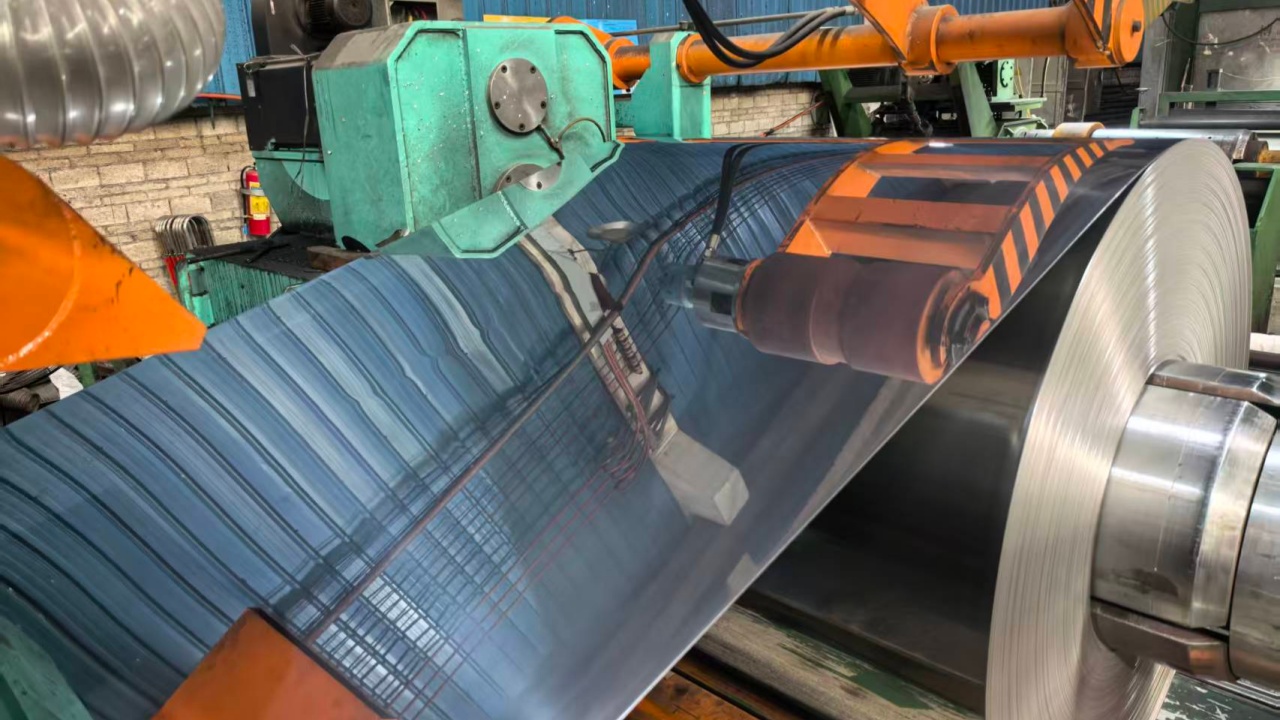
A typical cut to length stainless steel line begins with coil loading and uncoiling under controlled tension. The strip then passes through a multi-roll leveler that progressively bends the material to neutralize internal stresses and correct shape defects such as coil set, crossbow, or edge wave. Some advanced lines incorporate temper mills that apply a light reduction for additional flatness and surface improvement, or stretcher levelers that elongate the material beyond its yield point to reset residual stresses more thoroughly.
After leveling, the strip is measured and sheared to the programmed length with high accuracy. Stacking systems collect the sheets, often with interleaving paper or protective film applied to preserve surface quality. Final inspection checks length, width, flatness, and visual appearance before bundling and packing.
When this sequence is performed by a capable provider of CTL processing China, manufacturers benefit from modern equipment, competitive energy and labor costs, and integrated export logistics. Many Chinese processors combine coil procurement, processing, and container loading in a single service package, simplifying the supply chain for international customers.
Applications Across Manufacturing Sectors
Cut to length stainless steel supports a broad range of industries. In food processing and commercial kitchen equipment manufacturing, precisely sized sheets feed laser cutting and forming lines for sinks, tables, and enclosures. Architectural fabricators use custom stainless steel sheets for cladding, panels, and structural components where exact dimensions reduce on-site adjustment.
Automotive and appliance producers rely on leveled blanks for stamping and deep drawing operations where flatness and consistency affect part quality. Chemical and process equipment manufacturers order heavy-gauge plates cut to tank and vessel dimensions, reducing welding preparation time. Even smaller job shops benefit by ordering mixed lengths matched to current project lists rather than maintaining large coil inventories.
In each case, the combination of accurate sizing and improved flatness from professional sheet cutting service operations translates into higher first-pass yield and lower secondary rework.
Sourcing Considerations and Working with CTL Processing China
Selecting the right partner for CTL stainless steel involves evaluating equipment capability, quality systems, and communication. Ask about maximum and minimum thickness and width ranges, achievable length tolerances, flatness guarantees, and surface protection options. Confirm that mill test certificates remain attached to the processed material and that packaging protects edges and surfaces during ocean freight.
CTL processing China offers particular advantages for volume buyers. Large processing centers maintain extensive coil inventories across common grades and finishes, allowing rapid turnaround. Integrated services that include slitting, brushing, or protective film application further reduce the number of handling steps. Clear communication of length lists, nesting preferences, and packing requirements helps ensure the delivered material matches production needs exactly.
Lead times, minimum order quantities, and payment terms should be discussed early. Many suppliers accommodate mixed-length orders within a single production run, which is especially useful for manufacturers with varied part sizes.

Industry Trends and Future Outlook
Demand for precision custom stainless steel sheets continues to grow as manufacturers seek higher efficiency and lower waste. Advances in leveling technology, automated measurement, and digital order systems improve consistency and shorten lead times. Sustainability pressures also favor CTL approaches that reduce scrap generation and optimize material use. Providers of CTL processing China are investing in higher-capacity lines and tighter process controls to meet these expectations.
Cut to length stainless steel has moved from a convenience service to a strategic supply option for manufacturers focused on efficiency, quality, and cost control. By converting coils into precisely sized, leveled sheets through professional sheet cutting service operations, companies reduce internal processing burdens and improve overall production performance. Whether sourced locally or through capable CTL processing China partners, the approach delivers measurable benefits in yield, labor, inventory, and process reliability.
Manufacturers evaluating their material supply strategy should carefully compare the total cost and operational impact of full coil versus CTL stainless steel. For many production environments, the shift to ready-to-use custom sheets represents a clear step toward leaner, more competitive operations.
Frequently Asked Questions (FAQs)
- What is cut to length stainless steel?
It is stainless steel coil that has been uncoiled, leveled, and sheared into flat sheets or plates of specified lengths, ready for further fabrication without additional cutting or leveling at the customer’s facility. - What are the main benefits of CTL stainless steel for manufacturers?
Key benefits include reduced material waste, improved flatness and dimensional accuracy, lower in-house labor and equipment needs, simpler inventory management, and faster production throughput. - How does CTL processing China compare with local cutting?
CTL processing China often combines competitive coil pricing with modern processing equipment and export packaging, resulting in attractive total landed costs for many international buyers while maintaining quality and traceability. - What tolerances can be expected with a professional sheet cutting service?
Length tolerances are typically tighter than standard mill tolerances, and flatness is controlled through multi-roll leveling. Exact values depend on thickness, grade, and the specific line, so confirmation with the supplier is recommended. - Can I order mixed lengths in one batch of custom stainless steel sheets?
Yes. Most modern CTL lines can produce multiple lengths from the same coil according to a provided list or nesting plan, improving material utilization. - Is protective film available on cut to length stainless steel?
Yes. Protective film or interleaving paper is commonly applied to preserve surface quality during handling, transport, and storage, especially for finishes such as 2B or BA. - Does CTL processing affect the mechanical properties or corrosion resistance?
Proper leveling and shearing do not meaningfully alter the base properties of the stainless steel. Certificates confirming chemistry and mechanical values remain valid for the processed sheets. - What information should I provide when ordering CTL stainless steel?
Specify grade, thickness, width, exact lengths or length list, surface finish, tolerance and flatness requirements, packaging preferences, and any need for mill test certificates. - Is cut to length stainless steel suitable for laser cutting and press brake work?
Yes. The improved flatness and controlled residual stress make leveled CTL sheets particularly well suited for laser cutting, punching, and precision bending operations. - When is full coil still better than CTL stainless steel?
Full coil remains preferable for continuous high-volume processes such as tube welding or roll forming, or when in-house cutting capacity is already highly optimized and scrap rates are low.
Conclusion
Cut to length stainless steel continues to prove its value for manufacturers seeking efficiency and consistency. By partnering with capable providers of sheet cutting service and CTL processing China, companies convert coil into production-ready custom stainless steel sheets that support leaner operations and higher overall productivity.
READY TO GET MORE INFORMATION
Post time: Aug-06-2026


