
439 Stainless Steel
If you work in automotive manufacturing, exhaust system fabrication, or industrial processing, chances are you have encountered the need for a material that balances cost, performance, and durability. Enter 439 stainless steel ---- a ferritic stainless steel grade that has become a go-to solution for engineers and procurement professionals worldwide.
In this comprehensive guide, we will break down everything you need to know about 439 stainless steel, from its chemical composition and mechanical properties to its real-world applications.

What Makes 439 Stainless Steel Unique?
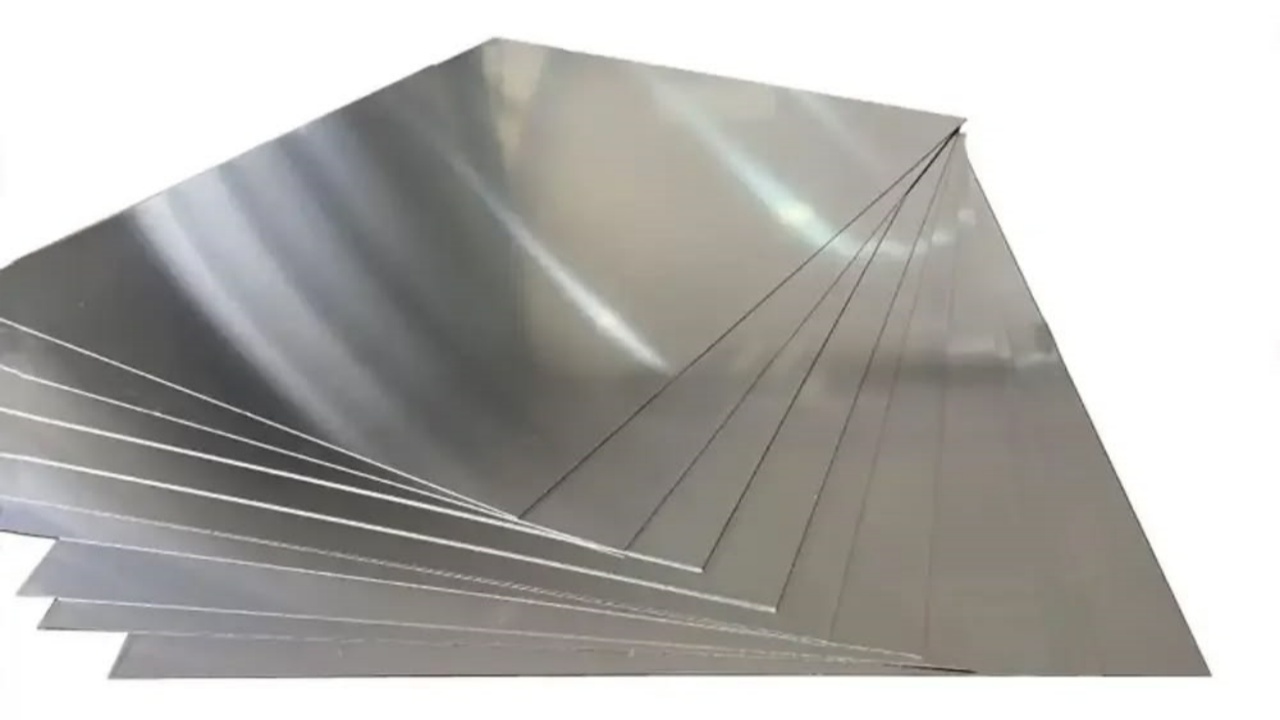
439 stainless steel is a titanium-stabilized ferritic stainless steel known for its excellent corrosion resistance, oxidation resistance at elevated temperatures, and superior formability.
Unlike austenitic grades such as 304 stainless steel, 439 stainless steel contains little to no nickel, making it more cost-stable and less susceptible to price volatility. The addition of titanium (Ti) as a stabilizing element prevents sensitization—a phenomenon where chromium carbides form at grain boundaries during welding, leading to intergranular corrosion. This means that 439 stainless steel can be used in the as-welded condition without the need for post-weld annealing.
Chemical Composition
The carefully balanced chemistry of 439 stainless steel ensures a fully ferritic structure at all temperatures.
|
Element |
Composition (%) |
|
Carbon (C) |
0.025 max |
|
Manganese (Mn) |
0.50 max |
|
Silicon (Si) |
0.75 max |
|
Chromium (Cr) |
17.00 – 19.00 |
|
Nickel (Ni) |
0.50 max |
|
Titanium (Ti) |
0.20 + 4(C+N) min – 0.50 max |
|
Iron (Fe) |
Balance |
The stable effect of low carbon content combined with titanium element is the key factor for the excellent welding performance and intergranular corrosion resistance of 439 stainless steel.
The core properties of 439 stainless steel
Introduce 439 stainless steel from the aspects of mechanical properties, physical properties, and corrosion resistance and oxidation resistance.
Mechanical Properties
When evaluating a material for structural or component applications, the mechanical properties are paramount. Here are the typical 439 steel properties you can expect:
|
Property |
Metric |
|
Tensile Strength |
455 – 483 MPa |
|
Yield Strength |
296 – 331 MPa |
|
Elongation |
32 – 36% |
|
Hardness |
74 – 78 |
|
Density |
7.70 g/cm³ (0.278 lb/in³) |
Physical Properties
Beyond strength, the physical characteristics of 439 stainless steel make it particularly attractive for high-temperature applications:
- Melting Point: Approximately 1505°C (2741°F) .
- Thermal Expansion: The coefficient of thermal expansion for 439 is lower than that of austenitic steels (like 304), which is a significant advantage when paired with carbon steel components in heat exchangers, as it minimizes thermal stress .
- Thermal Conductivity: Higher than that of austenitic grades, allowing for better heat dissipation.
Corrosion and Oxidation Resistance
439 stainless steel excels in oxidizing environments. It offers superior resistance compared to 409 stainless steel, especially in wet corrosion conditions involving chlorides. It resists pitting and stress corrosion cracking (SCC), a common failure mode for austenitic steels in chloride-rich environments.
In terms of oxidation, 439 can withstand intermittent service temperatures up to 850°C. It outperforms 409 stainless steel significantly at 927°C (1700°F) in cyclic oxidation tests, making it a reliable choice for exhaust systems that experience severe thermal cycles
The applications of 439 stainless steel
439 stainless steel finds its primary use in applications where temperatures are too high for 409 stainless steel and where better aqueous corrosion resistance is needed than what 409 can provide. Its combination of properties makes it a versatile workhorse in several key industries.
Automotive Exhaust Systems
The most significant use of 439 stainless steel is in automotive stainless steel systems, particularly in the exhaust system. This is where the material truly shines. As an exhaust stainless steel, it is used for various components that must withstand high temperatures and corrosive exhaust gases.
- Exhaust Manifolds: For applications where temperatures can be high, 439 stainless steel provides good oxidation resistance .
- Exhaust Pipes and Mufflers: The material is capable of being formed into complex shapes, making it ideal for tubular manifolds and exhaust system components where temperatures often exceed the oxidation limit of grade 409 steel .
- Catalytic Converter Shells: It is used in both the cold and hot ends of the system, offering a balance of performance and cost . The development and application of this grade have been significant in the Chinese automotive industry for producing high-quality, economical exhaust systems .
The trend in the automotive industry is moving towards lighter, more efficient vehicles, and ferritic stainless steels like 439 stainless steel play a crucial role by offering lower cost and good performance compared to heavier, nickel-rich austenitic grades. For example, grades like 439 and 434 provide significant improvements over 409 stainless steel in the cold part of the exhaust system, increasing component lifespan at a lower cost than 304 stainless steel.

Heat Exchangers and Boilers
Because of its low thermal expansion coefficient and high thermal conductivity, 439 stainless steel is ideal for heat exchanger tubing. It is often used in residential furnaces and industrial heat exchangers, where it can be paired with carbon steel shells without the need for expansion joints.
Other Industrial Applications
- Water Heaters: Used in flame direct-fired water heaters due to its resistance to corrosion from hot water and combustion gases.
- Kitchen Equipment: Its good formability and resistance to mild chemicals make it suitable for catering equipment.
- Architecture: Used in some architectural applications where a ferritic finish is desired.
The comparison of 439 stainless steel and 409 /304 stainless steel
Choosing the right grade of stainless steel is a critical decision for any project. Here, we compare 439 stainless steel to other common grades to highlight its advantages and appropriate use cases.
439 stainless steel vs. 409 stainless steel
This is the most common comparison for exhaust applications.
409 Stainless Steel: The workhorse of the exhaust industry. It is the cheapest and most common ferritic stainless steel, with a low chromium content (10.5-11.75%) .
439 Stainless Steel: In comparison, 439 stainless steel offers superior oxidation and corrosion resistance, particularly in high-temperature areas or where exposure to chlorides (like road salt) is a concern . While 409 performs adequately, 439 is the better choice when applications are too high for 409.
439 stainless steel vs. 304 stainless steel (Austenitic)
This comparison often arises when a project demands higher corrosion resistance than 409 can offer, but cost is a major factor.
304 Stainless Steel: The most common "18/8" austenitic stainless steel. It offers excellent corrosion resistance and formability but is significantly more expensive due to its high nickel content (8%) .
439 Stainless Steel: 439 can be used in many oxidizing environments where 304 is considered adequate in terms of general corrosion resistance. Crucially, it is also resistant to chloride stress corrosion cracking, a type of failure that 304 is susceptible to. Furthermore, 439 offers the advantage of lower costs than austenitic grades due to the lack of nickel . While 304 may have superior overall corrosion resistance, 439 is a more cost-effective and stable choice for applications where its performance is sufficient.

Questions and answers of 439 stainless steel
1.Is 439 stainless steel magnetic?
Yes. Like all ferritic stainless steels, 439 stainless steel is magnetic.
2.What is the difference between 439 and 430?
430 does not have titanium stabilization, making it susceptible to intergranular corrosion after welding. 439 was developed to address this by adding titanium, ensuring better weldability.
3. What is the minimum order of 439 stainless steel?
Usually MOQ is a mother coil, 20 tons.
4. Can 439 stainless steel be used for automobile exhaust system?
Of course.439 stainless steel is the best material for the air exhaust system.
5. Is 439 stainless steel more corrosion-resistant than 409?
Yes, its higher chromium content (17-19% vs. 10.5-11.75%) gives it substantially better resistance to corrosion and oxidation.
6.Can 439 stainless steel be welded easily?
Yes, it exhibits good weldability. The titanium stabilizer prevents intergranular corrosion, and in many applications, it can be used as-welded without requiring post-weld annealing.
7.What are the typical applications for 439 stainless steel?
It is widely used as automotive stainless steel for exhaust system components, as well as in heat exchangers, kitchen equipment, and hot water tanks.
8.Does 439 resist pitting?
Yes, it has better pitting resistance than 409, though it is not as resistant as 304 or 316. It performs well in mild chloride environments.
Conclusion
439 stainless steel represents a sweet spot in the world of stainless alloys. It bridges the gap between the economy of 409 and the performance of 304, offering superior oxidation resistance, excellent weldability, and outstanding formability. Whether you are manufacturing complex automotive exhaust manifolds or building reliable heat exchangers, 439 stainless steel provides the durability and performance required for demanding applications.
At Aoxing Metal, we specialize in the high-quality stainless steel. As your preferred stainless steel supplier, we are dedicated to providing you with top-tier 439 stainless steel coil and other forms tailored to your manufacturing needs.
Provide Your Details of Inquiry
Post time: Jul-28-2026


