304 stainless steel
In cold rolled 304 stainless steel materials, 2B and BA are two common surface types. The two surfaces differ significantly in terms of production process, appearance, surface properties, and application. This article will conduct a comprehensive analysis from multiple aspects and compare the surface properties of 304 stainless steel 2B and BA, providing professional references for customers in material selection.

The difference of Production process
The difference in surface effect is essentially a distinction between annealing and post-treatment processes. This is the most crucial criterion for differentiating 2B from BA.
2B surface is the standard surface for cold-rolled stainless steel. The processing procedure is: cold rolling - annealing - pickling - leveling.
The full name of BA is bright annealing. The process flow is: cold rolling - protected atmosphere bright annealing - leveling. The key difference lies in the annealing process: the sheet material undergoes high-temperature annealing in a sealed furnace filled with inert gas, with complete air isolation throughout the process.
The difference of appearance
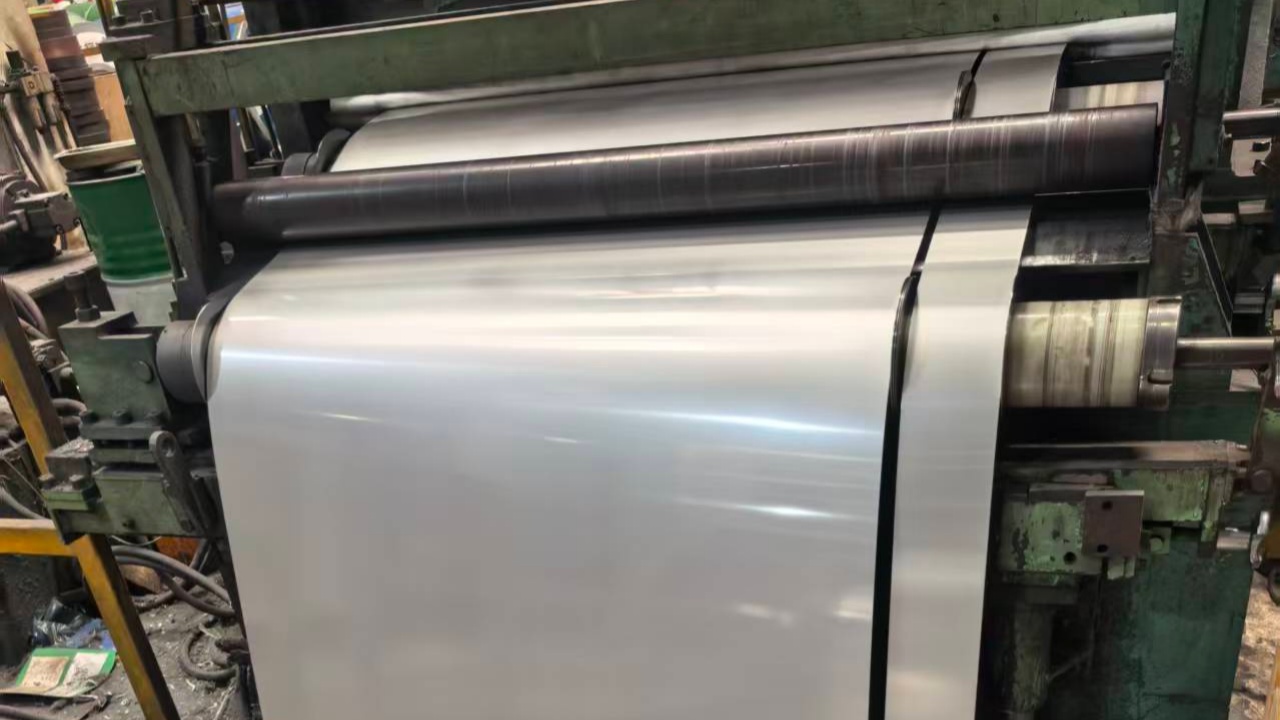
2B surface of 304 stainless steel is matte gray with a smooth texture. However, upon closer inspection, there is a slight unevenness. The roughness is relatively high, and the grain texture is fine and uniform. The luster is weak and there is no mirror effect.
BA surface of 304 stainless steel has a high gloss, high reflectivity, extremely high purity, extremely fine texture, and a much lower roughness, presenting a mirror-like effect.
The difference of processing performance
2B is a common CR stainless steel surface, with extremely strong processing compatibility. It is the preferred base material for advanced stainless steel processing. 2B can undergo processes such as hairline, sandblasting, polishing, PVD, bending, and stamping. It suitable for large-scale deep processing production.
BA has a relatively high glossiness but is relatively weak in terms of scratch resistance. Even a slight friction will leave obvious scratches. Therefore, BA is more suitable for polishing, mirror, coloring processes. It is inclined towards processing that requires high light reflectivity.

The difference of price and cost
The 2B surface is simple in process, highly scalable for mass production, and offers low overall cost. It provides the best cost-effective among CR 304 stainless steel surfaces on the market.
The BA surface requires bright annealing treatment, which has high requirements for the environment and equipment, and also has high production costs. Compared with the 2B surface of the same specification, its price is generally higher.
The difference of application
The main difference in application between the 2B surface and the BA surface of 304 stainless steel lies in the following:
2B surface presents a silver-white matte appearance. It does not reflect light and has excellent corrosion resistance. It is also less costly.Therefore,It is mostly used in industrial scenarios where visibility is not required or where functionality needs to be emphasized, such as in chemical equipment, inner containers for kitchenware, pipes, and components that require deep drawing processing or subsequent spraying.
BA surface has undergone bright annealing treatment, resulting in a higher surface finish that is even close to a mirror surface. It is easy to clean and is commonly used in situations where both stainless steel's corrosion resistance and aesthetic appearance are required, such as the exteriors of household appliances, high-end elevator panels, architectural decorations, and bathroom products.

Conclusion
2B 304 stainless steel and BA 304 stainless steel are both two common and widely used materials. Choosing between 2B and BA depends on the actual application requirements and costs. If there are brightness requirements, it is better to choose BA; otherwise, 2B is preferable.
Provide Your Details of Inquiry
Post time: Jun-12-2026