304 stainless Steel
If you are involved in procurement or manufacturing, one of the first questions you ask is: what is the current 304 stainless steel price? As the most widely used austenitic stainless steel grade, 304 serves as the backbone for countless industries—from kitchenware and chemical tanks to architectural cladding and automotive trim. Yet, if you have ever compared quotes from multiple mills or traders, you have probably noticed that the numbers can vary significantly.
This is not random; it is the result of a complex web of interrelated factors. In this guide, we will break down every major element that influences the cost of 304 stainless steel and offer practical advice to help you negotiate better deals.
The impact of key raw materials:Nickel
The story of 304 stainless steel price always begins with chemistry. 304 stainless steel contains approximately 8–10.5% nickel and 18–20% chromium, along with iron, carbon, manganese, and silicon. Among these, nickel is the single most expensive component.It typically accounts for 60-75% of the total cost of its raw materials. The fluctuation of nickel prices on the London Metal Exchange (LME) is the most direct factor driving the price of 304 stainless steel.

The impact of product form and processing
For the purchase of 304 stainless steel, whether to directly purchase stainless steel coils or plates, whether it is cold rolled or hot rolled, and what kind of surface treatment is used, all these factors will affect the price.
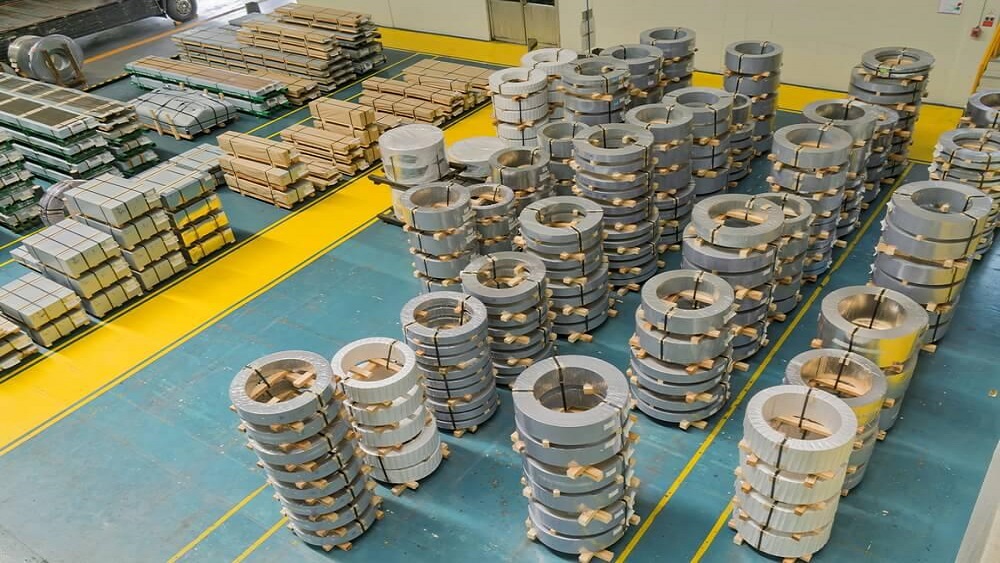
304 stainless steel coil vs 304 stainless steel plate
The stainless steel plate is produced by processing steel coils through procedures such as rolling, cutting, and straightening. These additional processing steps increase the costs of labor, equipment, and waste.
| Product Form | Characteristics of the cost structure | Applicable scenarios |
| 304 stainless steel coil | Basic price with fewer processes | Large-scale manufacturing, continuous production lines, factories that require further disassembly or stamping |
| 304 stainless steel plate | In addition to the base price, there are also processing fees for subsequent operations such as opening the plate and cutting. | Finished products, small-batch production, and directly-installed architectural decorative panels |
Cold rolled vs Hot rolled
Hot rolling (No.1): Produced by rolling at high temperatures, it has a rough surface, large thickness tolerance, but lower cost. It is often used as the raw material for cold rolling or directly applied to industrial structural components with low surface requirements.
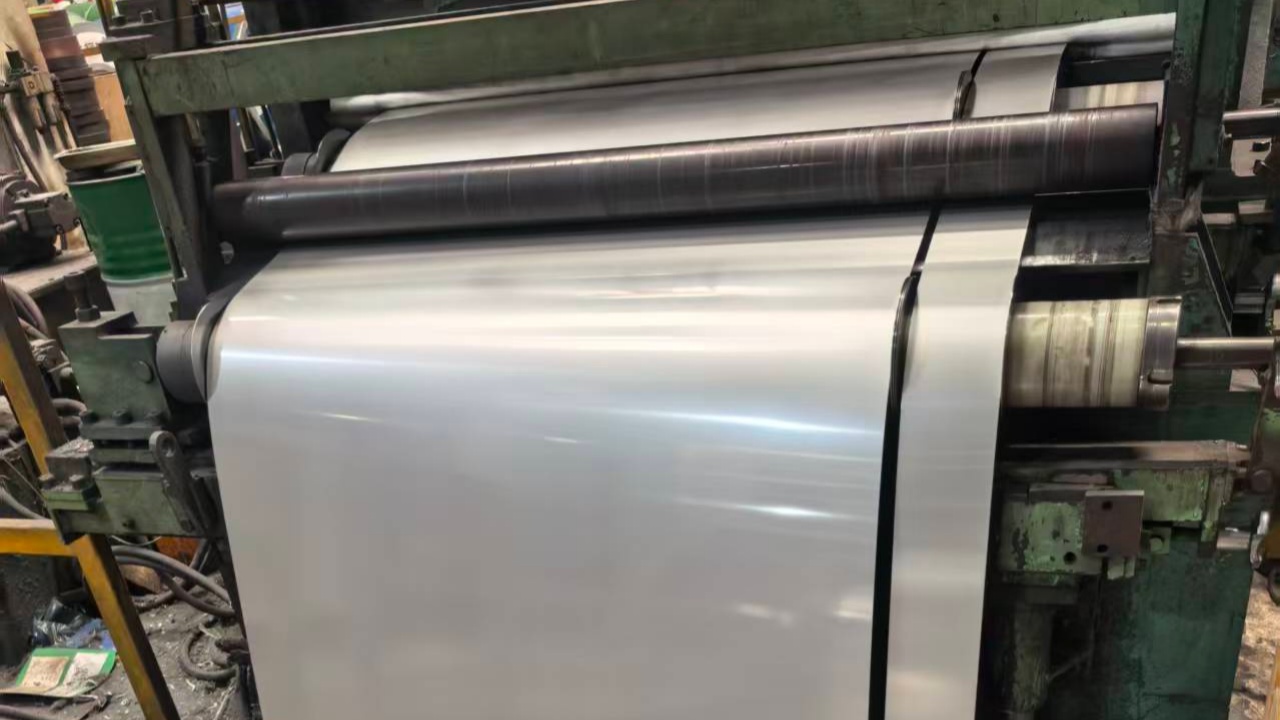
Cold rolling (2B, BA, etc.): Further rolling of hot-rolled coils at room temperature, resulting in excellent surface finish, high dimensional accuracy, and superior mechanical properties. Due to multiple processes and higher process requirements, cold rolled stainless products are usually more expensive than hot-rolled products.
Different surface treatment in different price
2B: The standard silvery-white surface obtained after cold rolling, annealing and pickling serves as the price benchmark.
BA (Bright Annealing): The material is annealed under a protective atmosphere, resulting in a brighter and more reflective surface.
Brushed (No.4/ HL,etc.): The surface is treated with a sanding belt to create a brushed finish, featuring continuous texture.
Mirror (6K/8K): Multiple grinding and polishing processes to achieve a mirror-like finish.
Decorative sheet surface treatment: stamping, etching, embossing, PVD, etc.
Most of the surface treatments are further processed on the basis of 2B surface, and their prices are higher than those of 2B surface. The processing fees for different surface treatments vary, which results in the final prices of the finished products made on 304 stainless steel substrates also being different.
Package and protective film result in different price
To prevent surface scratches during transportation and processing, a protective film is usually applied to the surface of 304 stainless steel , and the packaging for export is prepared before transportation. Although this incurs a small amount of cost, it is crucial for ensuring the final product quality.
304 stainless steel plates and coils are in different package.
The packaging of stainless steel coils includes rubber, waterproof paper, paper tubes, and galvanized edge protection.
The packaging of stainless steel plates is usually in wooden boxes, wooden frames, and galvanized fixing strips.
The packaging of stainless steel plates is usually at least twice as expensive as that of stainless steel coils.

Protective film affect the price
For different applications or surfaces of 304 stainless steel, customers will choose different protective films.
Simple surface treatments, such as 2B, NO.4, brushed finish, etc., are usually offered with lining paper and have a lower price.
For most decorative sheet surface treatments such as mirror , etched, PVD, etc., they are usually protected by ordinary PVC film. The price is about four times higher than that of liner paper.
If laser cutting is required later, a laser film must be used for protection. The price will vary from several times to several tens of times that of the lining paper.
The influence of market supply and demand
Supply side: When steel mills increase production due to rising profits or capacity release, supply increases. If demand remains unchanged, prices will naturally face downward pressure and decline. Conversely, when steel mills experience profit contraction and voluntarily reduce production and conduct maintenance, supply decreases, and prices will moderately rise.
Demand side: When demand is strong, it can effectively absorb the supply, creating the momentum for inventory reduction and price increase; while when demand is weak, the downstream only maintains necessary purchases, resulting in sluggish market transactions and prices being prone to decline rather than rise.

Different origins in Different price
China is a major producer and seller of 304 stainless steel, with many steel mills manufacturer. Differences among these mills—such as raw material sources and composition, production lines, and quality control measures—result in varying production costs, which in turn leads to different price.
Tisco: As a state-owned enterprise, the core logic behind its high prices lies in its technical strength and brand value. It usually addresses the demands of "critical bottlenecks" or major national projects.
Yongjin: It belongs to the field of precision cold rolling. Its price can be higher than that of Tsingshan because its products have better performance in terms of tensile strength, surface smoothness, and thickness tolerance, and are more suitable for manufacturing mid-to-high-end products.
Tsingshan: It is the world's leading producer of stainless steel. Its advantage lies in its integrated "mining - iron - steel" production chain layout, which results in lower raw material costs.
The impact of shipping costs and exchange rates
For international trade, the shipping cost is a significant part of the total cost for exporting 304 stainless steel. Political conflicts can cause significant fluctuations in shipping costs. Therefore, the choice between FOB and CIF terms has a significant impact on the final quotation.
Exchange rate fluctuations are an important risk factor that needs to be taken into consideration by 304 stainless steel suppliers when setting prices. When the RMB appreciates, the prices become “higher” for the purchasers. When the RMB depreciates, the prices appear to be “lower”.

FAQ of 304 stainless steel price
1.Why are the prices of 304 sheets from different suppliers so different?
The differences mainly stem from raw material costs, product specifications, purchase volume, trade terms, import tariffs, and subsequent processing, etc.
2.Which is cheaper, the price of 304 stainless steel coil or the price of 304 stainless steel sheet?
Generally, in the same material and thickness, the steel coil is usually cheaper. This is because stainless steel sheets require additional processes such as shearing, cutting and flattening, which all increase the cost.
3.Why are Cold Rolled Stainless products more expensive than Hot Rolled ones?
Cold rolling is a further processing step based on hot rolling. It involves more procedures and has higher requirements for equipment and processes to achieve better surface finish, dimensional accuracy and mechanical properties. Therefore, the cost is higher.
4.How to choose a reliable supplier of 304 stainless steel?
Don't just focus on the price. You should also evaluate the supplier's qualification certification, factory size, monthly sales volume, and various services, etc.
5.How does the LME nickel price affect my procurement cost?
Nickel constitutes the majority of the cost for 304. When the LME nickel price rises, it will directly increase the production cost of steel mills, which will be reflected in the 304 stainless steel quotation.
6.In the long term, what is the most significant factor influencing 304 stainless steel price?
The supply and demand fundamentals of nickel are the most fundamental and enduring factor affecting the price of 304 stainless steel.
7. Does X-METAL have a price advantage of 304 stainless steel?
Sure! X-METAL has direct access to steel mills, and also has factory production lines for cutting, sanding, and mirror finishing, etc. While maintaining the quality, the price also offers a significant competitive advantage.
8. Is the quality of 304 stainless steel the same regardless of different origins?
Yes.The 304 stainless steel produced by different steel mills has differences in terms of surface and physical properties.

Conclusion
In summary, the formation and fluctuation of 304 stainless steel price is the result of the joint action of internal product attributes and external market factors. Product chemical composition, surface processing, coil and sheet form differences, and cold and hot rolling processes form the basic price system; while origin advantages, market supply and demand, , ocean freight, and exchange rate changes drive real-time price fluctuations. For purchasers, accurately distinguishing the price differences between 304 stainless steel coil price and 304 sheet price, and understanding the cost characteristics of cold rolled stainless products can effectively optimize procurement costs.
Choosing a professional and reliable 304 stainless steel supplier can not only obtain transparent and reasonable stainless steel market price, but also ensure product quality and stable supply, laying a solid foundation for long-term stable enterprise operation.
Provide Your Details of Inquiry
Post time: Jul-17-2026