What Is 410S Stainless Steel?
Among the ferritic stainless steel family, 410S stainless steel occupies an irreplaceable position due to its unique "non-hardening" characteristic and well-balanced overall performance. As a low-carbon, non-hardening modification of the 12% chromium stainless steel grade, it effectively resolves the cracking issues that traditional 410 martensitic stainless steel tends to experience during welding and high-temperature service. This makes it an ideal material choice for the petrochemical industry, heat treatment equipment, and numerous other industrial sectors.
For procurement professionals, engineers, and end-users, understanding the core advantages of this material is the foundation for making correct sourcing decisions. This article provides an in-depth analysis of 410S stainless steel—from its chemical composition and key performance parameters to typical application scenarios—and offers practical selection and purchasing guidance to help you maximize the value of this material in your projects.

Chemical Composition and Key Characteristics
The core design philosophy behind 410S stainless steel is to maintain the corrosion resistance of the 410 grade while significantly improving its processing and welding performance through precise chemical adjustments. The balance of its chemical elements is the root cause of its excellent overall properties.
| Element | Content Range (%) | Role and Impact |
| Carbon (C) | ≤ 0.08 | Low-carbon design. This is the key differentiator from 410 steel. The maximum 0.08% carbon content effectively suppresses martensite formation, ensuring the material's toughness during welding and at elevated temperatures. |
| Chromium (Cr) | 11.5 – 13.5 | Core corrosion-resistance element. Provides fundamental oxidation and corrosion resistance, enabling stable performance in most atmospheric conditions, fresh water, and mild acid/alkali environments. |
| Manganese (Mn) | ≤ 1.0 | Deoxidizer and austenite stabilizer, helping to improve hot workability. |
| Silicon (Si) | ≤ 1.0 | Deoxidizer that positively contributes to high-temperature oxidation resistance. |
| Nickel (Ni) | ≤ 0.60 | Added in small amounts to partially stabilize austenite, but controlled within a range that does not disrupt the primary ferritic structure. |
| Phosphorus (P) | ≤ 0.040 | Impurity element, controlled to ensure toughness. |
| Sulfur (S) | ≤ 0.030 | Impurity element, controlled to ensure hot workability and corrosion resistance. |
Physical and Mechanical Properties
Thanks to the chemical composition design above, 410S stainless steel exhibits a series of unique physical and mechanical characteristics.
Physical Properties
Density: 7.73 g/cm³
Elastic Modulus: 200 GPa (29.0 × 10³ ksi)
Electrical Resistivity: 60 µΩ·cm (23.7 µΩ·in)
Thermal Conductivity: 26.9 W/m·K (at 100°C / 212°F)
Typical Room-Temperature Mechanical Properties (Annealed Condition)
| Property | Typical Value | Remarks |
| Tensile Strength | 448 MPa (65 ksi) | ASTM A240 typically requires ≥ 415 MPa |
| Yield Strength (0.2% offset) | 276 MPa (40 ksi) | ASTM typically requires ≥ 205 MPa |
| Elongation (50 mm gauge) | 30% | Reflects excellent ductility; ASTM typically requires ≥ 22% |
| Hardness (HRBW) | Approx. 75 | Low hardness aids machinability; ASTM requires ≤ 89 HRBW |
The Non-Hardening Feature: The Soul of 410S
The most defining characteristic of 410S stainless steel is its inability to be hardened by heat treatment. Standard 410 steel is martensitic and can achieve high strength through quenching, but this introduces the risk of cold cracking during welding. By reducing the carbon content, 410S stainless steel limits the formation of austenite at high temperatures, so that even when rapidly cooled from elevated temperatures, it retains the soft, ductile ferritic stainless steel 410S microstructure. This non-hardening property is the physical foundation of its superior weldability and high-temperature stability.

Core Performance Advantages – Why Choose 410S?
Choosing 410S stainless steel essentially means choosing reliability and process-friendliness for your project.
Superior Weldability
When welding traditional martensitic stainless steels, the heat-affected zone tends to form hard and brittle martensitic structures, leading to cold cracking. In contrast, the non-hardening nature of 410S stainless steel means it is less prone to hardening and cracking during welding. This makes it highly suitable for manufacturing equipment and components that require extensive welding, such as distillation trays, heat exchangers, and pressure vessel internals. It is worth noting that while its weldability is superior to 410, it is generally considered slightly less weldable than the most common ferritic 409 stainless steel.
Good Corrosion and Oxidation Resistance
410S stainless steel offers corrosion resistance comparable to the 410 grade, sufficient to withstand:
- Atmospheric corrosion
- Fresh water
- Mild organic and inorganic acids
- Alkaline solutions
In terms of high-temperature oxidation resistance, the material performs exceptionally well:
- Continuous service: Can operate reliably for extended periods at temperatures up to 705°C (1300°F).
- Intermittent service: Under fluctuating temperature conditions, its oxidation resistance remains effective up to approximately 811°C (1500°F).
Excellent Formability and Fabrication Performance
Owing to its ferritic microstructure and relatively low hardness, 410S stainless steel exhibits good cold formability, making it suitable for bending, spinning, roll forming, and other fabrication methods. Whether you purchase plates for stamping or cold rolled 410S coil for continuous high-speed stamping production lines, you can expect ideal forming results and extended tool life.

Typical Application Scenarios
The applications of 410S stainless steel are almost always linked to its two key traits: "non-hardening" and "heat resistance."
Petrochemical and Oil Refining Industry
This is the most mature and extensive application field for 410S stainless steel. Key uses include:
- Distillation trays and column internals: These components operate in high-temperature, corrosive media and require both corrosion resistance and thermal fatigue resistance.
- Heat exchangers: Leveraging the material's good thermal conductivity and corrosion resistance.
- Tower packings: Used to improve gas-liquid contact efficiency in separation processes.
Heat Treatment and Industrial Furnace Equipment
Utilizing the material's high-temperature oxidation resistance and microstructural stability, it is commonly used to manufacture:
- Annealing boxes: Protect workpieces during annealing cycles, enduring repeated heating and cooling.
- Quenching racks: Support high-temperature workpieces, requiring adequate high-temperature strength and oxidation resistance.
- Heat-resistant baffles and partitions: Separate different temperature zones within furnaces.
Other Industrial Applications
Mining and ore processing machinery: Using its wear resistance and moderate corrosion resistance in abrasive environments.
Nuclear industry: Research indicates that 410S is a candidate material for control rod drive mechanisms (CRDM) in nuclear power plants, where its long-term thermal aging behavior is an important study subject.
Consumer goods: Knives, scissors, kitchen utensils, and other daily items that require good formability and moderate corrosion resistance.

410s stainless steel product forms
Understanding the common product forms of 410S stainless steel is essential for trade and procurement.
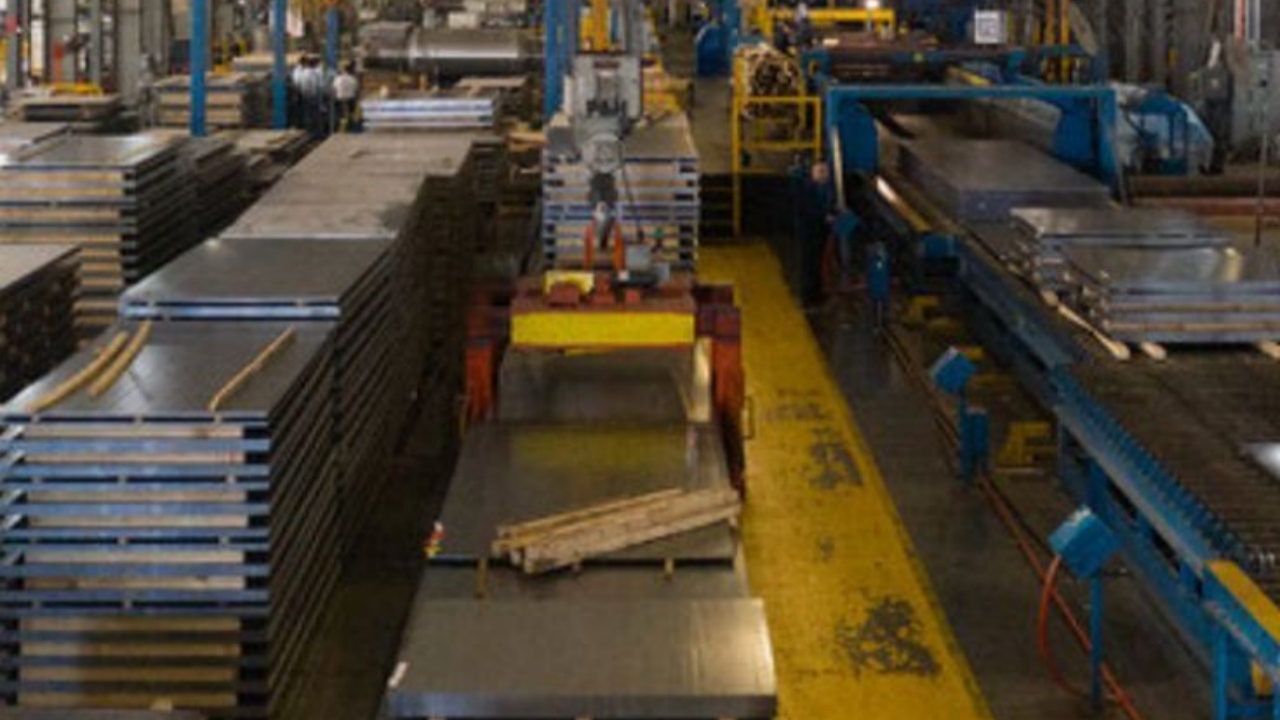
Hot rolled plates: Used for manufacturing pressure vessels, industrial furnace components, and structural parts.
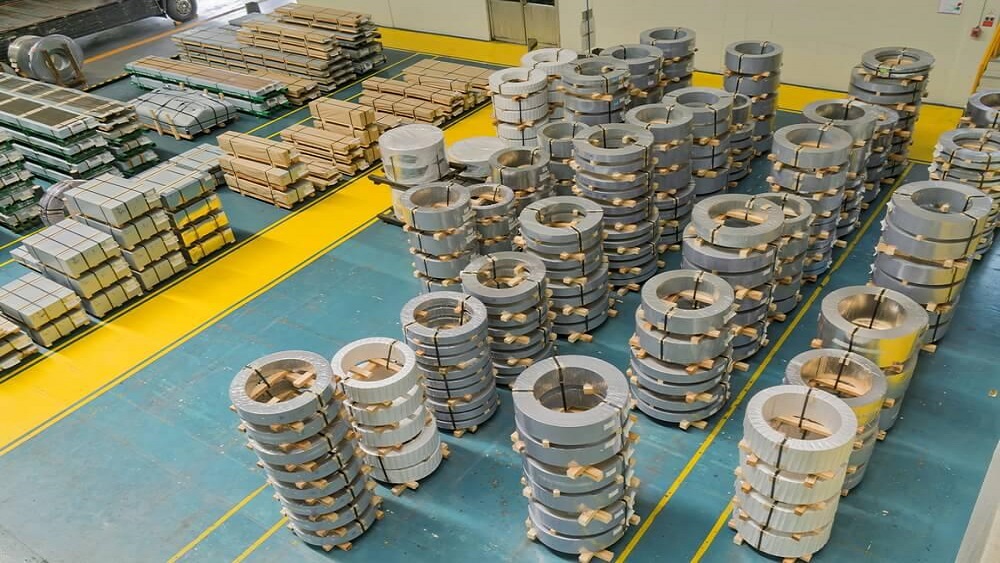
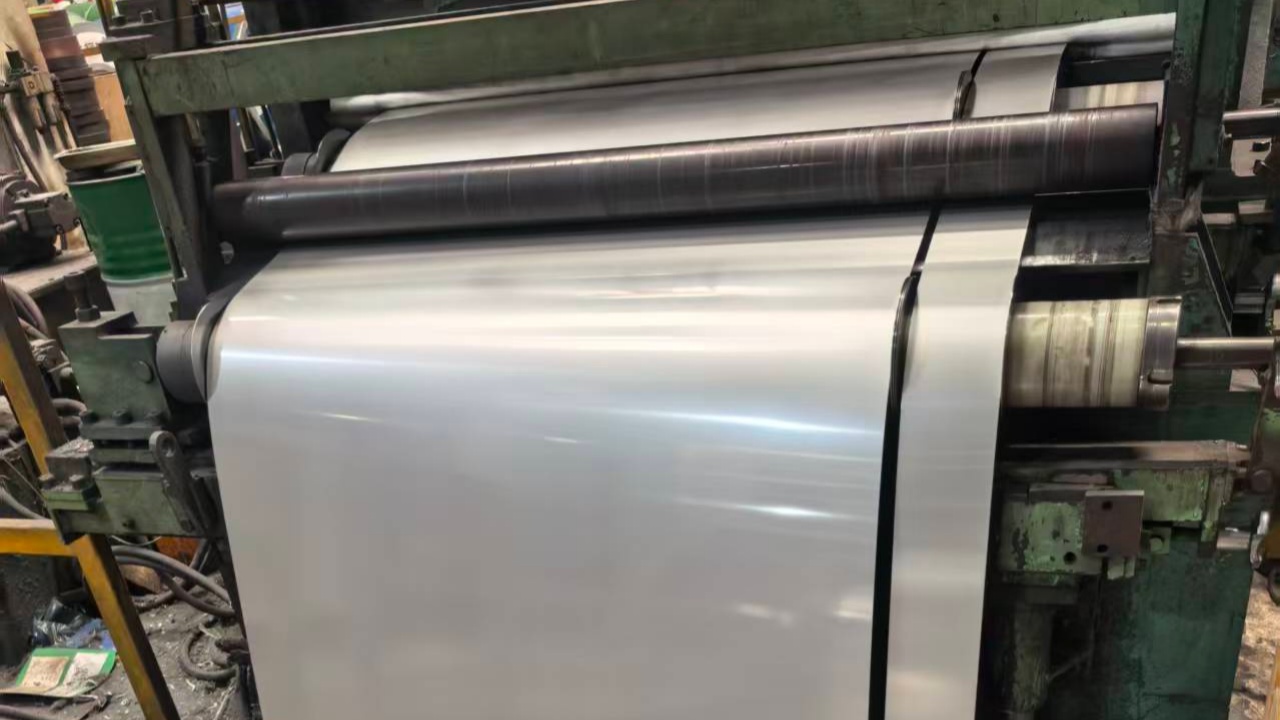
Cold rolled coils and sheets: Cold rolled 410S coil offers a smooth surface finish and tight dimensional tolerances, making it widely used for stamped parts, home appliance components, and decorative applications. When a high-quality surface finish is required, BA 410S (Bright Annealed) products are the preferred choice, offering a mirror-like, lustrous surface directly suited for decorative uses or precision components without additional surface treatment.
Strip and foil: Used for precision manufacturing and small-diameter applications.
Frequently Asked Questions (FAQ)
1.What is the main difference between 410S and 410 stainless steel?
The core difference lies in carbon content. 410 can contain up to 0.15% carbon and can be hardened by heat treatment to achieve high strength, but it suffers from poor weldability. 410S strictly controls carbon to ≤ 0.08%, sacrificing hardenability in exchange for excellent weldability and high-temperature stability with minimal cracking risk.
2.Can 410S stainless steel be hardened by heat treatment?
No. "Non-hardenability" is its most defining characteristic. No heat treatment can significantly increase its hardness. It is used exclusively in the annealed (soft) condition, which is precisely why it resists cracking during welding.
3.Is 410S magnetic?
Yes, it is magnetic. As a ferritic stainless steel, it is fully ferromagnetic in the annealed condition.
4.How should I choose between 410S and regular 410 steel?
If welding is required, you must choose 410S stainless steel, as it does not become brittle or crack after welding. If welding is not needed and higher strength and hardness are desired, then regular 410 is more suitable.
5.Is the 410S easy to machine?
It's extremely easy to machine. Its hardness is relatively low, much softer than 304. Therefore, it works smoothly for turning, milling, stamping, and bending, and it doesn't wear out the tools easily. The processing efficiency is also high.
6.Can 410S stainless steel be hardened by heat treatment?
No. "Non-hardenability" is its most defining characteristic.
7.Can the 410S be used outdoors?
Yes, but it is better suited for indoor, dry environments. Because the nickel content in 410S stainless steel is very low, it is prone to rusting in humid environments.
8. What are the main uses of cold rolled 410S coil?
Cold rolled coil offers superior surface quality and dimensional accuracy. It is primarily used for home appliance components, kitchen utensils, automotive trim strips, stamped parts, and other applications requiring high surface finish and tight tolerances.
Conclusion
In summary, 410S stainless steel occupies an irreplaceable niche in numerous industrial fields, thanks to its unique non-hardening characteristic, superior weldability, good heat resistance, and moderate corrosion resistance. It is not a material that pursues maximum strength; rather, it offers a well-balanced solution that prioritizes reliability, processability, and cost-effectiveness. Whether used to fabricate complex chemical column internals or as critical heat-resistant tooling components, choosing 410S stainless steel means choosing stability and efficiency.
Provide Your Details of Inquiry
Post time: Jul-20-2026