Precision Stainless Steel Strip
In modern industrial manufacturing, the choice of materials directly determines the quality and service life of end products. As a metal material characterized by exceptional dimensional precision and superior performance, precision stainless steel strip has become an indispensable raw material across various high-end manufacturing sectors, including electronics, automotive, medical, and aerospace. Unlike standard stainless steel coils, precision stainless steel strip is produced through rigorous processes such as cold rolling, annealing, and finishing; it offers thickness tolerances controlled at the micron level, with surface quality and mechanical properties far superior to those of conventional products.
This article provides an in-depth look at the definition, production processes, key advantages, application scenarios, and common issues associated with precision stainless steel strip, helping industry professionals gain a comprehensive understanding of this critical material and highlighting why selecting a reliable supplier is essential.

What is precision stainless steel strip?
Definition and Core Characteristics
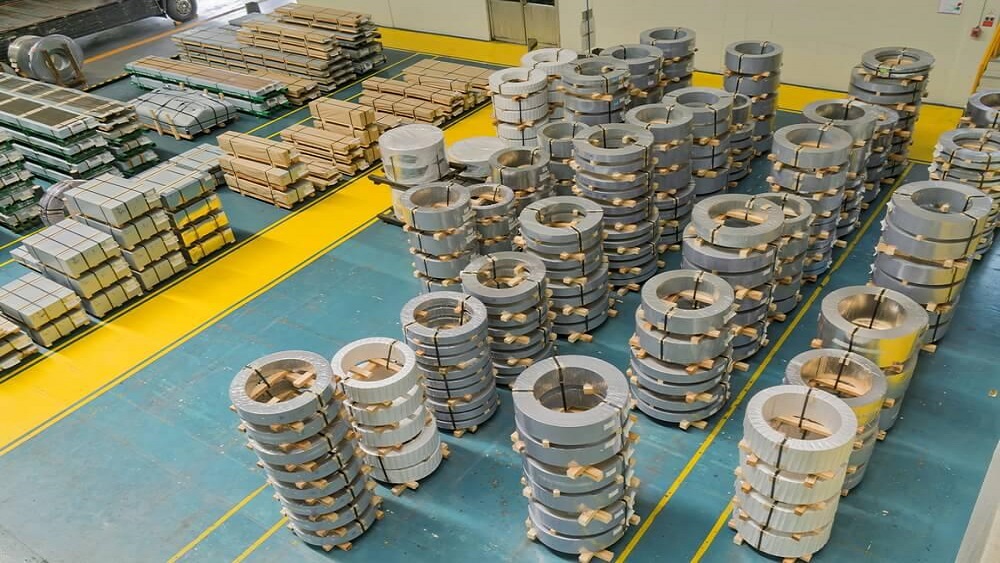
Precision stainless steel strip refers to a flat-rolled stainless steel product characterized by narrow width, extremely thin gauge, and strict dimensional tolerance control. Typically produced from hot-rolled coils through multiple cold-rolling passes, it can achieve a final thickness as low as 0.02 mm, with widths slit to meet specific customer requirements. Its core characteristics can be summarized as follows:
- High dimensional accuracy: Thickness tolerances can be controlled within ±0.005 mm, with strict standards for width tolerance and edge flatness.
- Superior surface quality: Through bright annealing or polishing processes, various surface finishes—such as 2B and BA—can be achieved to meet diverse industrial needs.
- Stable mechanical properties: Precise control over the degree of cold-rolling deformation and heat treatment processes enables the achievement of specific combinations of high strength, high hardness, or excellent ductility.
The Difference Between Precision Strips and Standard Cold-Rolled Strips
The fundamental difference between precision stainless steel strip and ordinary cold-rolled stainless steel strip lies not in whether the material has undergone cold rolling, but rather in its precision grade and the level of consistency control. While the production of ordinary cold-rolled strip prioritizes output and efficiency—resulting in wider dimensional tolerances and rougher surface quality—precision stainless steel strip emphasizes precision and consistency. Its manufacturing process relies on a system of advanced, optimally integrated equipment—such as 20-high rolling mills, continuous bright annealing furnaces, and tension leveling machines—where every stage influences the precision grade of the final product.
Production Process for Precision Stainless Steel Strip
Producing a high-quality precision strip involves a long chain of processes—ranging from cold rolling and heat treatment to finishing—with every step being closely interconnected.
Cold Rolling Process—The Core of Precision Control
The production of cold-rolled strip is the most critical stage in the entire precision strip manufacturing process. Multi-pass cold rolling is typically performed using 20-high or multi-roll mills, with strict control over the reduction ratio, rolling speed, and cooling/lubrication conditions in each pass. Since the material undergoes work hardening during cold rolling, annealing treatments are required between passes to restore plasticity.
Heat Treatment and Surface Treatment
Cold-rolled stainless steel strip requires annealing to relieve internal stresses, refine grain structure, and adjust mechanical properties. For precision stainless steel strip, the bright annealing process is most commonly used; this involves heating and rapid cooling in a protective atmosphere (such as hydrogen or dissociated ammonia) to produce a bright, oxide-free surface.
In addition, depending on the end-use, the following finishing processes may also be required:
Tension leveling: Improves flatness and eliminates waviness and warping.
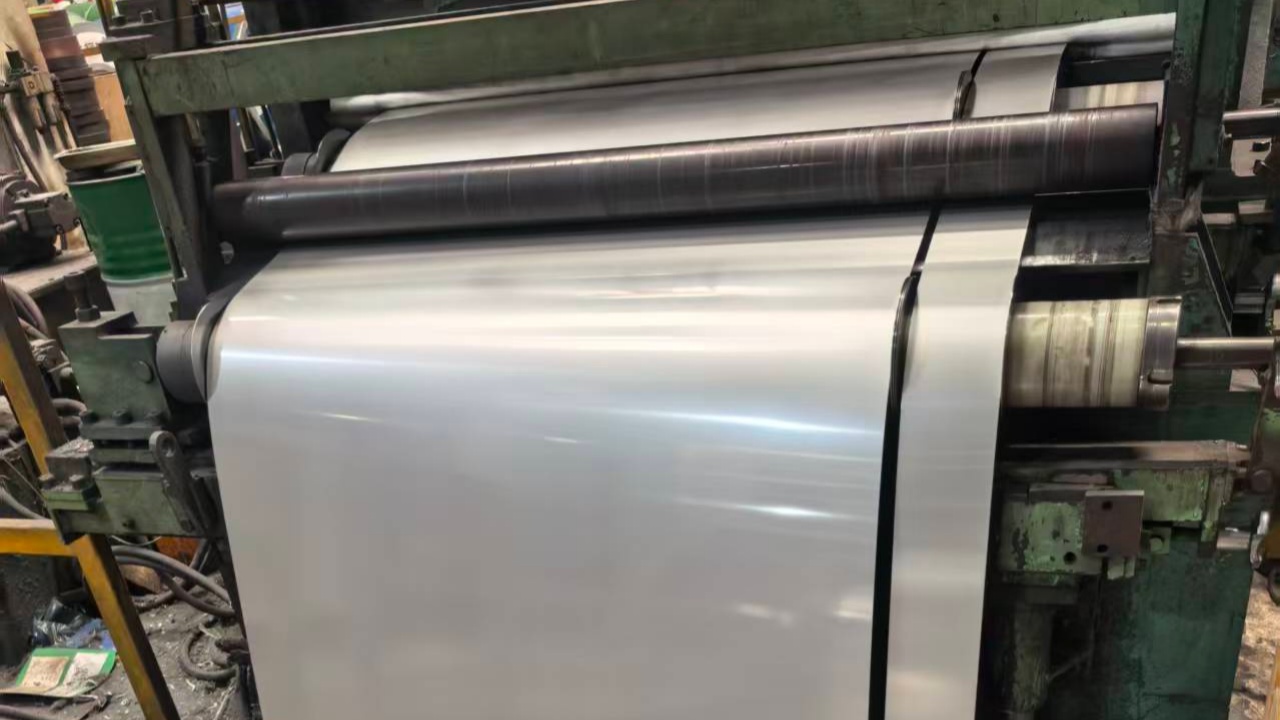
Slitting: Cuts wide coils into narrow stainless steel strips according to customer specifications.
Surface polishing: Produces decorative finishes such as mirror (8K) or hairline (HL).
Quality Control
Common defects encountered during the production of precision stainless steel strips include surface scratches, uneven thickness, edge cracks, and rust spots. Experienced precision strip manufacturers implement the following measures to control these issues:
- Conduct rigorous incoming inspections of raw materials to ensure compliance regarding chemical composition and initial surface quality.
- Periodically calibrate the rolling mill's roll gap and tension control systems.
- Optimize heat treatment processes to prevent intergranular corrosion and surface oxidation.
- Implement protective measures during packaging and transportation to avoid secondary damage.

Advantages and Applications of Precision Stainless Steel Strips
Understanding the advantages of precision stainless steel is of great help in material selection and application.
Core Strengths
The reason why precision stainless steel strips can hold an important position in the high-end manufacturing field mainly lies in the following characteristics:
High precision leads to convenient assembly: small dimensional tolerance, good interchangeability of parts, which can significantly reduce the subsequent processing adjustment costs.
Excellent corrosion resistance: containing chromium, nickel and other alloy elements, it is less prone to rust in humid, acidic and alkaline environments.
High strength and lightweight: through cold rolling strengthening, it can withstand higher loads at thinner thicknesses, which is conducive to the miniaturization of products.
Good processing performance: it can provide different hardness grades such as soft state, semi-hard state and hard state according to needs, meeting the forming requirements of stamping, bending and stretching, etc.
Main application fields
| Industry sector | Typical application components | Common grades/characteristic requirements |
| Electrical and Electronic | Connector, shielding cover, battery electrode sheet | 304, requiring high precision and excellent conductivity |
| Automobile manufacturing | Sensor housing, sealing gasket, engine components | 316L, requiring high heat resistance |
| Medical devices | Surgical instruments, dental toolsSurgical instruments, dental tools | 304. Requirement for Biocompatibility |
Questions and Answers about Precision Stainless Steel Strips
1.What is the minimum thickness that the precision stainless steel strip can reach?
Currently, the mainstream precision strip manufacturers can reliably produce strips with thickness ranging from 0.02mm to 3.0mm.
2.How to distinguish between precision stainless steel strips and ordinary cold-rolled strips?
The key difference lies in precision control and performance consistency. Precision strips have quantified indicators for thickness tolerance, plate shape flatness, and surface roughness, and each roll of product must undergo strict testing; while the tolerance range of ordinary cold-rolled strips is much larger.
3.Which material grades are commonly used for precision stainless steel strips?
The most commonly used ones are 304 (general corrosion resistance), 316L (resistant to seawater corrosion), and 430 (ferritic, used in non-severe corrosive environments). The specific material selection needs to be determined comprehensively based on the corrosiveness of the usage environment, working temperature, and stress conditions.
4. What is the leading time?
About 25-30 days, but mainly depend on the quantity.
5. What is the MOQ?
The precision stainless steel strips is 3 tons.
6.Can the precision stainless steel strip be welded?
Sure. Austenitic stainless steel (such as 304 and 316) has excellent welding properties and can be welded using methods such as TIG, laser welding, and spot welding.
7.Can I customize the precision stainless steel strip?
Yes, we can provide the customized service,including the size ,thickness and surface treatment.
8.What is the benefit of using a narrow strip?
Narrow strip stainless steel is cut to the exact width required for the component, reducing material waste during the stamping process and ensuring consistent feeding through high-speed machinery.
Provide Your Details of Inquiry
Post time: Aug-20-2026