JUST FEEL FREE TO SEND YOUR REQUEST
How to Choose a Stainless Steel Coil Manufacturer
Stainless steel coil manufacturer selection is one of the most consequential decisions a fabricator, OEM, or distributor can make, because coil quality directly affects downstream forming, surface appearance, corrosion performance, and overall production costs. A strong partner delivers consistent chemistry, tight dimensional tolerances, reliable surface finishes, and dependable logistics; a weak one creates scrap, delays, and customer complaints.
Whether you are evaluating a stainless steel coil manufacturer China, comparing options from a cold rolled coil supplier, seeking an OEM stainless steel coil partner, visiting a coil factory China, or assessing a full-scale stainless steel mill, the same core principles apply. This guide walks through the practical criteria that separate reliable producers from the rest, with detailed explanations, a comparison table, and answers to the questions buyers ask most often.

Start with Clear Requirements
Before contacting any potential supplier, define exactly what you need. Specify the grade (304, 316L, 430, 201, duplex, etc.), thickness range, width, surface finish (2B, BA, No.4, etc.), edge condition, coil weight or inner/outer diameter preferences, and any special mechanical or corrosion requirements. Clarify whether you need standard coils, slit coils, or fully customized OEM stainless steel coil programs with private labeling, special packaging, or unique tolerances.
Clear specifications allow you to test whether a manufacturer truly understands your application rather than simply quoting a catalogue item. They also become the benchmark for evaluating samples, mill test certificates, and production capability later in the process.
Manufacturer vs Trading Company
One of the first distinctions to make is whether you are dealing with an actual producer or a trading company. A genuine stainless steel mill or coil factory China owns or tightly controls the melting, hot-rolling, cold-rolling, annealing, and finishing equipment. This vertical integration usually translates into better process control, more consistent quality, and greater flexibility for customization.
Trading companies can be useful for small quantities or mixed products, but they introduce an extra layer between you and the production floor. For critical or high-volume programs, most experienced buyers prefer to work directly with a stainless steel coil manufacturer that can demonstrate ownership of production assets, in-house testing laboratories, and full material traceability.
Quality Systems and Certifications
Look for ISO 9001 as a baseline quality management certification. Many reputable producers also hold ISO 14001 for environmental management and can supply material to ASTM, EN, JIS, or GB standards as required. For export markets, the ability to provide EN 10204 3.1 or 3.2 mill test certificates with every heat is essential.
Ask how the manufacturer controls incoming raw materials, monitors chemistry during melting, and verifies mechanical properties and surface quality on finished coils. In-house spectrometers, tensile testers, hardness testers, and surface inspection systems are positive signs. Willingness to accept third-party inspection by SGS, BV, or TUV before shipment adds further confidence.
Production Capability and Equipment
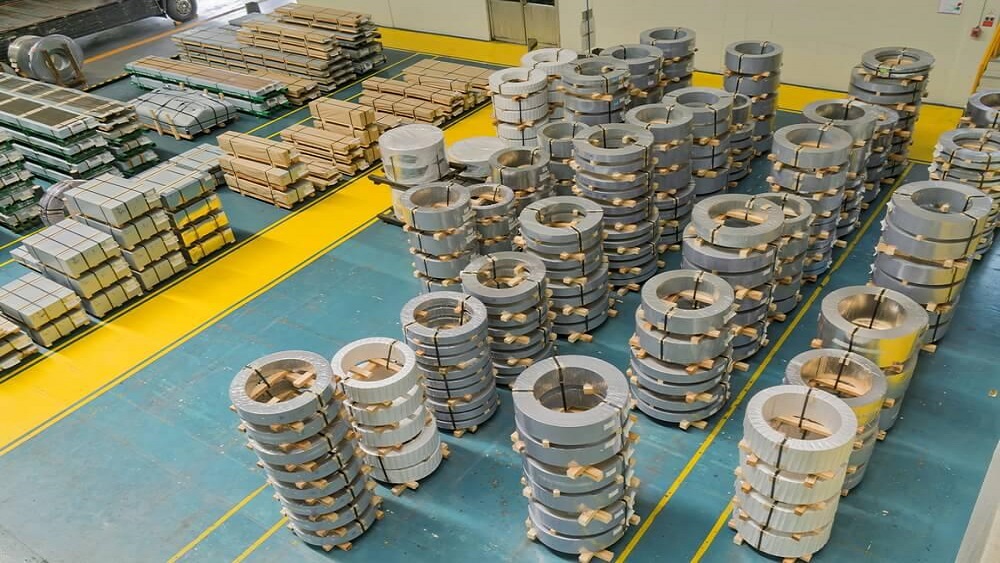
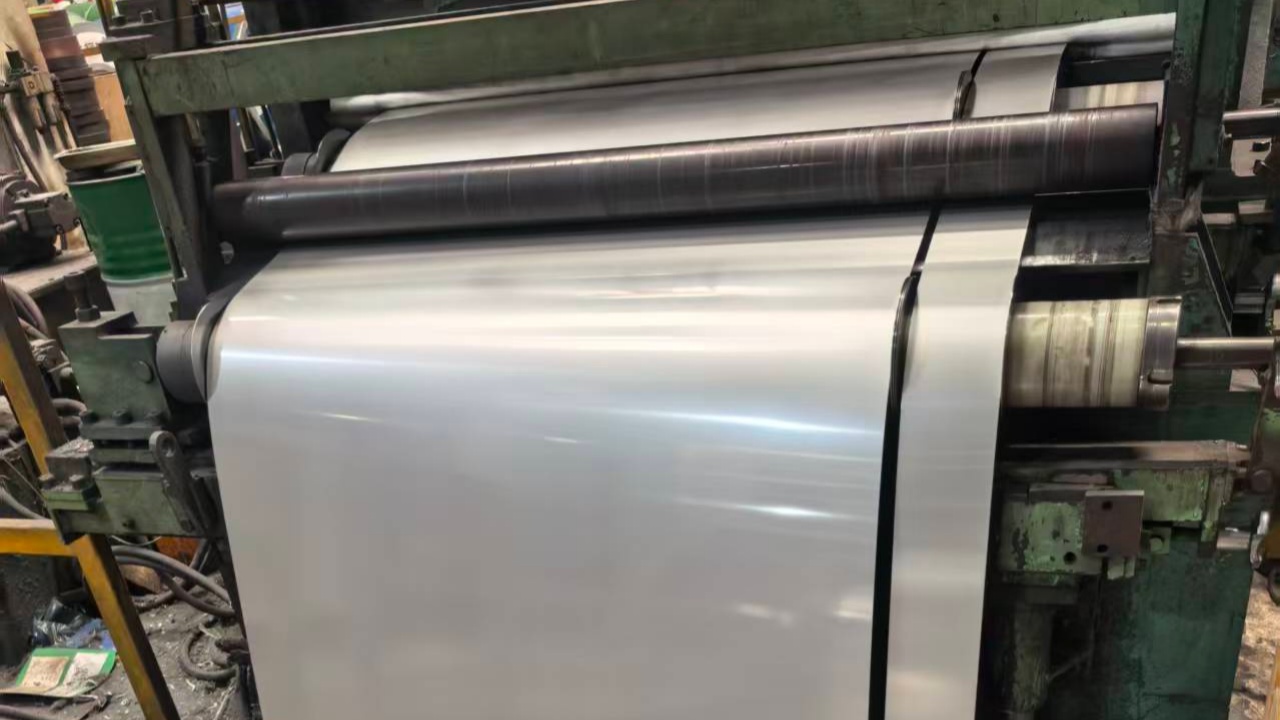
A capable cold rolled coil supplier should be able to demonstrate modern cold-rolling mills, continuous or batch annealing lines, skin-pass mills, and tension leveling or stretcher leveling equipment. These assets determine the tightness of thickness tolerance, flatness, and surface consistency that the finished coil will achieve.
Inquire about monthly or annual capacity for the grades and thicknesses you use most. A manufacturer that regularly produces your specification is more likely to maintain stable process parameters than one that treats your order as a one-off. For OEM stainless steel coil programs, confirm that the producer can handle private labeling, special protective films, custom coil weights, and mixed-length or mixed-width packaging when required.

Surface Finish and Dimensional Control
Surface finish is one of the most visible quality attributes. A reliable stainless steel coil manufacturer should consistently deliver the requested finish—whether 2B, BA, No.4, or others—with minimal variation across the coil width and from coil to coil. Ask about their process controls for annealing atmosphere, pickling, and final skin-pass or bright annealing.
Dimensional accuracy matters equally. Tight thickness tolerance and good shape (low coil set, crossbow, and edge wave) reduce scrap and improve performance on high-speed stamping or roll-forming lines. Request historical capability data or process capability indices if your application is tolerance-critical.
Traceability and Documentation
Full heat-to-coil traceability is non-negotiable for most industrial buyers. Every coil should carry a unique identification that links back to the melt chemistry, rolling parameters, and mechanical test results. Mill test certificates should be clear, complete, and issued under the manufacturer’s own quality system or an accredited third party.
When working with a stainless steel coil manufacturer China, confirm that the documentation can be provided in English and that heat numbers are permanently marked on the coil or packaging in a way that survives handling and storage.
Comparison Table: Key Evaluation Criteria
| Criterion | Strong Manufacturer | Weaker Option | Why It Matters |
| Ownership of Production | Owns melting / rolling / finishing lines | Trading company only | Better process control and customization |
| Quality Certifications | ISO 9001 + relevant product standards + MTC 3.1/3.2 | Limited or expired certificates | Traceability and compliance |
| Cold Rolling Capability | Modern multi-high mills, tight tolerance control | Older or limited equipment | Surface and dimensional consistency |
| Testing Laboratory | In-house chemical, mechanical, and surface testing | Relies solely on external labs | Faster feedback and process ownership |
| Customization / OEM Ability | Supports special tolerances, finishes, packaging, labeling | Standard catalogue only | Flexibility for OEM stainless steel coil programs |
| Capacity & Lead Time Stability | Consistent capacity for your volume | Frequent capacity or scheduling issues | Reliable supply |
| Export Experience | Regular shipments with proper packing and documentation | Limited export history | Fewer logistics surprises |
| Third-Party Inspection Openness | Welcomes SGS / BV / customer audits | Reluctant or restrictive | Risk reduction |
This table helps structure factory visits, questionnaire responses, and final supplier scoring.
Sampling and Trial Orders
Never move to large volume without evaluating actual material. Request representative samples or a small trial order of the exact grade, thickness, finish, and width you intend to buy. Test the material in your own forming, welding, or polishing processes. Check thickness variation, surface uniformity, edge condition, and how the coil pays off on your equipment.
A confident coil factory China or stainless steel mill will support sampling and will be transparent about any differences between sample and production material.
Commercial Terms and Risk Management
Evaluate payment terms, minimum order quantities, price validity periods, and the process for handling claims. Clarify packaging standards—especially for export—to protect edges and surfaces during ocean transit. Discuss force-majeure and capacity-allocation policies so you understand how the manufacturer prioritizes customers during tight market periods.
For long-term programs, consider visiting the facility. Seeing the melting shop, cold-rolling lines, annealing furnaces, and inspection stations firsthand provides insight that documents alone cannot convey. Many buyers also use third-party audit services for initial qualification of a new stainless steel coil manufacturer China.
Logistics and After-Sales Support
Reliable delivery performance and responsive technical support complete the picture. Ask about average on-time delivery rates, typical lead times for standard and special orders, and how the manufacturer handles quality or logistics issues after shipment. A partner that provides quick technical assistance when a coil behaves unexpectedly on your line is far more valuable than one that disappears after the invoice is paid.
Red Flags to Watch For
Be cautious of prices that are dramatically below market without a clear explanation, reluctance to provide mill test certificates or allow third-party inspection, vague answers about production equipment, or an inability to explain process controls. Inconsistent sample quality or difficulty obtaining references from similar customers are additional warning signs.
Building a Long-Term Partnership
The best relationships evolve beyond transactional purchasing. Share forecast information so the manufacturer can plan capacity. Provide feedback on material performance so process improvements can be made. Over time, a capable cold rolled coil supplier or OEM stainless steel coil partner can become an extension of your own supply chain, offering technical suggestions, inventory programs, and joint development of new specifications.
Stainless steel coil manufacturer selection rewards thorough due diligence. By focusing on real production capability, robust quality systems, transparent documentation, and proven consistency—especially when sourcing from a stainless steel coil manufacturer China, a specialized cold rolled coil supplier, an OEM stainless steel coil provider, a coil factory China, or an integrated stainless steel mill—you reduce risk and improve the reliability of your own products. Take the time to verify claims with samples, audits, and clear commercial agreements. The right partner pays dividends in lower scrap rates, smoother production, and fewer supply disruptions for years to come.

Frequently Asked Questions (FAQs)
- What is the most important factor when choosing a stainless steel coil manufacturer?
Consistent quality backed by full traceability and robust process control is usually the top priority. Certifications, equipment capability, and willingness to provide samples and third-party inspection follow closely. - Should I buy from a stainless steel coil manufacturer China or a local mill?
Chinese manufacturers often offer competitive pricing and large capacity. Local mills may provide shorter lead times and easier communication. The best choice depends on volume, required specifications, total landed cost, and your risk tolerance. - How can I verify that a cold rolled coil supplier actually owns production equipment?
Request factory videos or photos of the specific lines, ask for equipment lists, and, when possible, conduct or commission an on-site audit. Business registration documents can also help distinguish manufacturers from pure traders. - What documents should accompany every OEM stainless steel coil order?
A complete mill test certificate (preferably EN 10204 3.1 or equivalent) showing chemistry, mechanical properties, heat number, and compliance with the ordered standard is essential. Packing lists and certificates of origin are also typically required for export. - How important is in-house testing at a coil factory China?
Very important. In-house spectrometers, tensile testers, and surface inspection capability allow the manufacturer to control the process in real time rather than discovering problems only after external testing. - Can a stainless steel mill accommodate small trial orders?
Many can, although minimum order quantities vary. Starting with a trial order is the safest way to evaluate surface quality, dimensional consistency, and packaging before committing to larger volumes. - What surface finishes should a good stainless steel coil manufacturer offer?
At minimum, 2B and BA for cold-rolled products, with the ability to supply No.4, hairline, or other finishes either in-house or through qualified partners. Consistency within each finish is more important than the sheer number of options. - How do I protect myself against quality claims when buying internationally?
Use clear specifications, require mill test certificates, arrange pre-shipment inspection when appropriate, define acceptance criteria in the purchase contract, and work with suppliers who have a track record of resolving issues fairly. - Is price the best indicator of a reliable stainless steel coil manufacturer?
No. Extremely low prices often signal compromises in raw materials, process control, or documentation. Evaluate total cost of ownership, including scrap rates, processing efficiency, and supply reliability. - What role does technical support play after the coils are delivered?
Strong technical support helps resolve unexpected forming, welding, or surface issues quickly. Manufacturers that stand behind their material and assist with application questions add significant value beyond the coil itself.
READY TO GET MORE INFORMATION
Post time: Aug-26-2026